The 30-Day Tune-Up: Post-Occupancy Commissioning for High-Performance Builds
The transition from construction completion to occupancy represents the most vulnerable phase in the lifecycle of a high-performance home. While the industry excels at specifying advanced components—such as Vybuild’s Osblock systems, European fenestration, and high-efficiency heat pumps—the actual performance often drifts from the theoretical model due to installation variances and occupant behavior. This discrepancy, known as the "performance gap," creates liability for contractors and dissatisfaction for homeowners. This article outlines a standardized 30-day post-occupancy commissioning protocol designed to close this loop. By implementing a structured regimen of data collection, mechanical tuning, and envelope verification, builders can transform technical assurance into a marketable asset. We will detail the necessary diagnostic tools, specific performance tolerances, and the creation of a "Performance Certificate" that serves as the ultimate proof of quality, effectively mitigating callbacks and establishing a new revenue stream for professional contractors.
Closing the Loop: The Business Case for Post-Occupancy Verification
The traditional handover process often treats the exchange of keys as the project’s conclusion. However, in high-performance residential construction, the first month of occupancy is critical for system calibration. Buildings constructed with tight envelopes, such as those utilizing VY Flex House or Osblock technology, behave differently than code-minimum structures. Without verification, minor issues like unbalanced ERV flows or thermal bridging can compound into moisture problems or perceived discomfort, leading to expensive callbacks and reputational damage.
Shifting the operational model from installation to proven performance addresses two strategic needs. First, it validates the premium cost of high-performance materials by demonstrating tangible results—lower energy bills and superior air quality. Second, it creates a defensible data trail. Should a dispute arise regarding energy usage or comfort, the contractor possesses baseline data proving the system was delivering within specifications at the time of handover. This proactive approach changes the dynamic from reactive warranty repair to professional facilities management.
Essential Diagnostics and Envelope Integrity
Executing a 30-day tune-up requires a specific, yet accessible, toolkit. The barrier to entry for equipment is relatively low, with a startup cost often ranging between $2,000 and $5,000. Essential items include NDIR CO2 loggers, a thermal camera, an anemometer for airflow measurement, and a differential pressure gauge. While owning a blower door is ideal, this service can be subcontracted. The primary objective during the first inspection is verifying the envelope’s integrity after the trades have departed. Even with high-grade components like European windows, seal failures can occur during final trim work or utility installations.
The protocol demands a re-verification of air tightness. If the design target was Passive House standard (≤0.6 ACH50) or a high-performance goal (≤1.5 ACH50), the post-occupancy test should confirm these figures remain valid. Utilizing a smoke pencil in conjunction with a blower door depressurization test allows for the rapid identification of leakage pathways—commonly found around service penetrations, attic hatches, or window perimeters. Documenting these specific leak points with thermal imaging provides a clear "before and after" visual for the client when corrections are made.
Ventilation Balancing and Indoor Air Quality (IAQ)
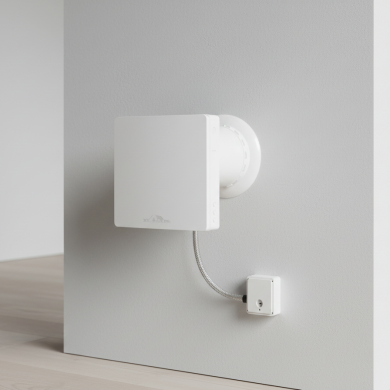
In airtight structures, mechanical ventilation is the lungs of the home. A common failure point in high-performance builds is an unbalanced Energy Recovery Ventilator (ERV) or Heat Recovery Ventilator (HRV), which can pressurize or depressurize the house, driving moisture into wall assemblies. The 30-day mark is the optimal time to verify flow rates against ASHRAE 62.2 standards. The target is for supply and exhaust flows to be balanced within a ±10% tolerance. This ensures that the high-efficiency recovery core is operating at its designed thermal efficiency.
Beyond flow rates, real-world IAQ metrics must be logged. Contractors should deploy CO2 data loggers in primary living areas and bedrooms for a 48 to 72-hour period. The target threshold for a healthy, high-performance environment is an average CO2 level below 800 ppm, with peak levels not exceeding 1000 ppm. Relative Humidity (RH) must also be scrutinized, with winter targets between 30–50% and summer caps at 60%. Deviations here are actionable indicators: high CO2 suggests under-ventilation, while high humidity may point to short-cycling cooling equipment or occupant behavior that requires education.
Thermal Systems and Energy Verification
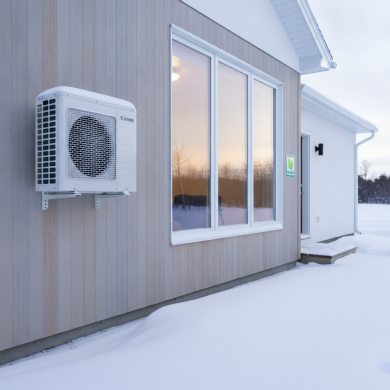
Validating the HVAC system, specifically heat pumps, requires moving beyond simple thermostat checks to measuring thermodynamic performance. The "Delta-T" (temperature difference) across the supply and return air provides immediate insight into the system’s efficiency. For cooling cycles, a Delta-T of 10–20°F (6–11°C) is typical; deviations suggest airflow restrictions or refrigerant charge issues. Furthermore, an instantaneous power snapshot—comparing the unit’s wattage draw against its output—can verify if the Coefficient of Performance (COP) aligns with manufacturer specifications.
Simultaneously, a comparison of modeled versus actual energy consumption validates the entire build. By extracting the first 30 days of smart meter data, contractors can perform a variance analysis against the energy model used during the design phase. A deviation within ±20% is generally acceptable given the variability of move-in activities. Larger discrepancies serve as a flag for investigation—often revealing simple fixes like incorrect thermostat schedules, backup resistance heating engaging unnecessarily, or domestic hot water settings that need adjustment.
The Client Handoff and Monetization Strategy
The culmination of this process is the "Performance Certificate," a document that translates technical data into client value. This deliverable should summarize the key metrics—ACH50, average CO2, ERV balance, and energy variance—in a clean, understandable format. This certificate does more than close a project; it serves as a powerful marketing tool for the homeowner (increasing resale value) and the builder (proving competence).
Builders should structure this tune-up not as a courtesy, but as a tiered service product. A "Basic" tier might cover IAQ logging and visual checks, while a "Premium" tier includes blower door re-testing and detailed energy analysis. This approach creates a repeatable revenue stream and keeps the contractor top-of-mind for maintenance contracts. Below is a reference guide for the key metrics required for this deliverables package.
| Metric | Target / Tolerance | Primary Tool | Action if Failed |
|---|---|---|---|
| Air Tightness | Passive: ≤0.6 ACH50 High-Perf: ≤1.5 ACH50 (Target: ±0.3 of design) |
Blower Door | Smoke test penetrations; seal outlets, windows, and service entries. |
| CO2 Levels | Average <800 ppm Peak <1000 ppm |
NDIR Datalogger | Increase ERV ventilation rate; check filter cleanliness. |
| Humidity (RH) | Winter: 30–50% Summer: 40–60% |
Hygrometer / Logger | Adjust ERV mode; check dehumidification setpoints. |
| ERV Balance | Supply ≈ Exhaust (±10%) | Manometer / Flow Hood | Adjust fan speed trim; check for crushed flex ducts. |
| Heat Pump Delta-T | Cooling: 16–22°F (9–12°C) Heating: Mfg. Spec |
Thermal Probe / IR | Check airflow filters; verify refrigerant charge (HVAC sub). |
| Energy Variance | Measured within ±20% of Modeled | Smart Meter / Clamp | Audit plug loads; review thermostat scheduling with client. |
To conclude, the 30-Day Tune-Up represents a fundamental shift in how high-performance homes are delivered. By moving beyond the physical installation of products like Osblock and Vybuild components to the empirical verification of their function, contractors bridge the gap between promise and reality. This process involves a rigorous, yet repeatable, set of diagnostics focused on envelope tightness, air quality, and thermal efficiency. The resulting data not only prevents costly callbacks by identifying issues early but also provides homeowners with the peace of mind that their investment performs as advertised. Ultimately, adopting this post-occupancy playbook elevates the contractor from a mere builder to a partner in building performance, securing a reputation for reliability and technical excellence in a competitive market.