Coast-Proof Construction: A Tactical Playbook for PEI Resilience
Prince Edward Island faces a distinct convergence of construction challenges: soft sandstone coastlines, increasing storm surge frequency, and rising sea levels. For contractors and homeowners, standard code compliance is no longer a guarantee of longevity. This article outlines a tactical Coast-Proof Framework designed specifically for the Atlantic Canadian context. We move beyond general climate theory into buildable specifics: precision site mapping, flood-resistant assemblies, and modular recovery strategies. The following sections detail a construction-focused playbook—structured as a strategic 8-point directive—that translates climate risk into specific design choices. By integrating elevated Osblock foundations, resilient Vybuild modular components, and European-grade water management, builders can deliver high-performance homes that withstand environmental stress. This is not merely about survival; it is about future-proofing assets and creating a marketable standard for coastal resilience in a high-risk era.
Site Dynamics and Vertical Strategy
The first line of defense in coastal construction is not the wall assembly, but the rigorous assessment of the site’s hydrological reality. Before breaking ground, contractors must establish a localized flood baseline. This involves walking the site to document high-water marks and erosion features, supplemented by LiDAR-derived elevation tools or municipal flood maps. The objective is to categorize the site into risk zones—high, medium, or low—determining safe staging areas for mechanicals and the required elevation for the structure.
Once the risk profile is established, the focus shifts to vertical separation. The design target for occupied floors should be a minimum of 0.6 meters (2 feet) freeboard above the Base Flood Elevation (BFE), with 1.0 meter recommended for high-risk zones. Achieving this requires a shift from standard slab-on-grade to elevated solutions. Osblock insulated foundation systems or engineered piles provide the necessary thermal continuity while resisting moisture saturation. Lower levels should be treated as intentionally floodable zones used strictly for storage, utilizing scour-resistant materials and flood vents to equalize hydrostatic pressure. This structural elevation is the single most effective capital investment to protect resale value and insurability.
Hydrophobic Envelope and Aperture Management
Elevating the structure handles surge risk, but wind-driven rain requires a specialized envelope strategy. The goal is to construct a moisture-tolerant wall assembly that allows for rapid drying if wetting occurs. This precludes the use of standard gypsum board in lower flood zones. Instead, builders should implement a continuous water-resistive barrier (WRB) paired with a ventilated rainscreen system. Exterior insulation must be hydrophobic; closed-cell XPS or mineral wool are superior to materials that retain water.
Fenestration represents the critical weak point in the envelope. Standard sliding windows often fail under the pressure of coastal storms. The upgrade strategy involves installing high-performance European-style tilt-and-turn windows. These units offer superior air-infiltration ratings, robust thermal breaks, and multi-point locking mechanisms that compress seals against wind pressure. Installation must include integrated sill pans tied directly into the WRB and back-primed frames. Below is a comparison of standard versus resilient assembly choices:
| Building Component | Standard Practice (High Risk) | Resilient Strategy (Coast-Proof) |
|---|---|---|
| Wall Insulation | Fiberglass batts (retains moisture, mold risk) | Mineral Wool / Closed-Cell Foam (hydrophobic, dries quickly) |
| Sheathing | Standard OSB (swells upon saturation) | Non-absorbent composite or plywood with high-perm WRB |
| Glazing | Standard sliders (leaks under pressure) | European Tilt-and-Turn (compression seals, triple glazed) |
| Lower Finishes | Drywall to floor | Sacrificial wainscoting or cement board (removable) |
Mechanical Survivability and Shoreline Defense
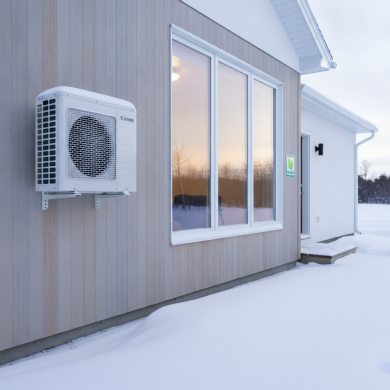
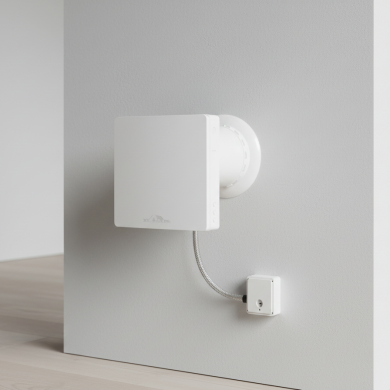
Internal systems must be decoupled from the flood zone. A resilient home places all critical mechanical, electrical, and plumbing (MEP) infrastructure above the design flood elevation. This includes the main electrical panel, hot water heaters, and ERV/HRV units. Ductless heat pumps are particularly advantageous in this context, as the outdoor units can be mounted on elevated brackets and the indoor heads eliminate the need for sub-floor ductwork that is prone to flooding.
Externally, the defense strategy should move from “hard armor” to “living shorelines.” Rigid sea walls often exacerbate erosion on adjacent properties and can fail catastrophically. A bio-engineering approach uses native salt-tolerant vegetation, dune restoration, and biodegradable coir logs to dissipate wave energy rather than reflect it. This method stabilizes the soil and maintains the natural sediment transport, offering a durable buffer that strengthens over time as root systems mature.
Modular Recovery and The Business of Resilience
Even with robust defenses, extreme events may necessitate repairs. The VY Flex House approach introduces the concept of modular replaceability. By designing assemblies as bolt-on modules—such as pre-plumbed bathroom pods or demountable lower wall panels—contractors can drastically reduce recovery time. This allows for the rapid swapping of damaged sections without invasive demolition, turning a catastrophic event into a manageable maintenance issue.
For the contractor, these technical upgrades translate directly into business leverage. Resilience is a sellable asset. By documenting these upgrades—elevation certificates, engineer-signed pile details, and flood-resilient material specs—builders provide clients with the data needed to secure insurance and potential government grants. Positioning a renovation or new build as “insurance-ready” and “climate-adaptive” moves the conversation from cost to investment protection. It differentiates the firm as a specialized partner capable of navigating the complex regulatory and physical landscape of coastal PEI.
Building in coastal Atlantic Canada requires a fundamental shift from static design to adaptive resilience. We have covered the critical steps: rigorous site assessment, elevating structure via robust foundations like Osblock, sealing the envelope with high-performance European fenestration, and protecting mechanical systems from surge events. Beyond the physical build, we explored the strategic value of living shorelines and the rapid-recovery potential of modular Vybuild components. For contractors, this is more than a checklist; it is a specialized service offering that addresses the immediate fears of PEI homeowners. By implementing these specific, documented upgrades, you provide not just a structure, but an insurable, lasting asset. The future of coastal construction belongs to those who build for the water, not just near it.