New 2025 Building Codes: Energy Changes for Atlantic Builders
New Building Codes 2025: Energy Efficiency Changes for Atlantic Builders
As 2025 approaches, Atlantic Canada builders and contractors face significant changes to energy efficiency requirements under updated provincial building codes. These new standards, designed to align with Canada's net-zero emissions goals, will impact everything from wall assemblies to mechanical systems across Prince Edward Island, New Brunswick, and Nova Scotia.
Enhanced Thermal Performance Requirements
The 2025 building code updates introduce stricter thermal performance standards that will fundamentally change how builders approach wall construction in Atlantic Canada. New minimum R-value requirements for wall assemblies have increased by 15-20% compared to current standards, reflecting the region's harsh winter climate and energy costs.
For residential construction, effective wall R-values must now meet or exceed R-24 in climate zones 7A and 7B, which covers most of Atlantic Canada. This represents a significant jump from previous R-20 minimums and requires builders to reconsider traditional construction methods.
OSBlock insulated wood formblocks offer an innovative solution for meeting these enhanced requirements. As a Canadian-manufactured wall construction system, OSBlock provides superior thermal performance with its EPS-insulated wood formblock design, making compliance with new R-value standards more achievable for Atlantic builders.
The code changes also mandate improved thermal bridging controls, requiring continuous insulation strategies that minimize heat loss through structural elements. This shift favors advanced wall systems that integrate insulation within the structural assembly.
Mechanical System Efficiency Mandates
New 2025 codes establish minimum efficiency ratings for heating, cooling, and ventilation systems that exceed current market standards. Heat pumps must now achieve minimum HSPF ratings of 9.5 for Atlantic Canada installations, while gas furnaces require AFUE ratings of 95% or higher.
The updated codes also mandate balanced ventilation systems for all new residential construction over 1,200 square feet. Energy Recovery Ventilators (ERVs) with minimum 70% efficiency ratings become required equipment, not optional upgrades.
For builders working with VY Flex House Kits like the VY 1200-Flex or VY 1400-Flex models, these mechanical requirements are already integrated into the design specifications, providing compliance certainty from the planning stage.
Water heating systems face new efficiency thresholds as well. On-demand water heaters with Energy Factor ratings above 0.90 will be required for most residential applications, replacing traditional tank systems in many installations.
Air Sealing and Building Envelope Standards
Perhaps the most challenging aspect of the 2025 code changes involves mandatory air leakage testing for all new construction. Buildings must achieve maximum air changes per hour (ACH50) of 2.5, down from the current 3.2 standard.
This requirement necessitates meticulous attention to building envelope details, from foundation connections to roof assemblies. Builders must implement continuous air barriers and undergo blower door testing to verify compliance before occupancy permits are issued.
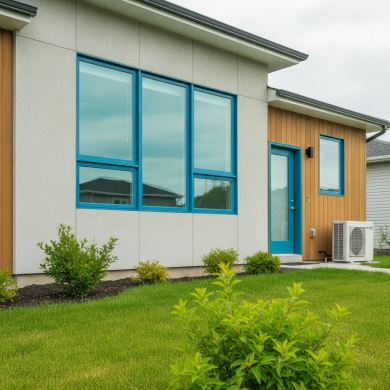
The code also introduces specific requirements for window and door installation that ensure thermal continuity. All fenestration products must achieve minimum U-factor ratings of 0.28 for windows and 0.21 for doors in Atlantic Canada's climate zones.
Proper installation materials become critical for meeting these standards. Construction foam adhesives and multi-purpose gun foams play essential roles in achieving required air sealing performance throughout the building envelope.
Compliance Timelines and Implementation
The rollout of 2025 building code changes follows a phased approach across Atlantic provinces. Prince Edward Island will implement new standards beginning January 1, 2025, for all permit applications, while New Brunswick and Nova Scotia follow with April 1, 2025 effective dates.
Builders have a six-month transition period where projects can proceed under current codes if permits are submitted before implementation dates. However, any modifications or additions after the effective dates must comply with new standards, even for grandfathered projects.
Training requirements also change under the new codes. Building officials must complete updated certification programs, while contractors performing air sealing work need specialized training credentials. The Atlantic Canada construction industry is preparing intensive educational programs to ensure workforce readiness.
Material suppliers and distributors are already adjusting inventory to support compliance requirements. Products that don't meet new efficiency thresholds will be phased out, while advanced building materials that exceed requirements are being prioritized in supply chains.
Financial Implications and Support Programs
While initial construction costs may increase by 3-8% due to enhanced requirements, builders and homeowners can access various support programs to offset expenses. Federal programs like Canada Greener Homes continue providing rebates for high-efficiency equipment installations.
Provincial utility companies are also expanding rebate programs for builders who exceed minimum code requirements. These incentives often cover the cost difference between standard and high-efficiency mechanical systems, making compliance more economically attractive.
For builders specializing in energy-efficient construction, the new codes create competitive advantages. Companies already using advanced wall systems, high-performance windows, and efficient mechanical equipment will find themselves ahead of the compliance curve.
The long-term financial benefits for homeowners include reduced energy costs, improved comfort, and higher property values. Buildings constructed to 2025 standards typically consume 25-30% less energy than current code-minimum homes.
Preparing for Successful Code Compliance
Successful adaptation to 2025 building codes requires strategic planning and material selection. Builders should evaluate current suppliers and construction methods against new requirements, identifying areas where upgrades are necessary.
Design teams must integrate thermal modeling and energy analysis into standard practice. Software tools that calculate thermal performance and predict energy consumption become essential for demonstrating code compliance during the permit process.
Subcontractor education is equally important. Insulation installers, HVAC technicians, and window installers all need training on new standards and testing procedures. Quality control protocols must be updated to ensure consistent compliance across all trades.
Key Takeaways
- Enhanced R-value requirements increase wall assembly minimums to R-24 for Atlantic Canada
- Mandatory air leakage testing limits new construction to 2.5 ACH50 maximum
- Heat pumps must achieve HSPF 9.5+ ratings, while ERV systems become required for larger homes
- Implementation begins January 1, 2025 in PEI, April 1, 2025 in NB and NS
- Advanced building materials and systems provide compliance advantages for prepared builders
Ready to Build Code-Compliant Projects?
VY Build Inc. provides the complete range of products and expertise needed for 2025 building code compliance across Atlantic Canada. From OSBlock insulated wall systems to high-efficiency heat pumps and ERV ventilators, our solutions are designed for the region's climate and regulatory requirements.
Contact our technical team to discuss how VY Build products can streamline your code compliance strategy while delivering superior energy performance for your clients. Visit vybuild.ca or call our Prince Edward Island headquarters to learn more about building the future of sustainable construction in Atlantic Canada.