Atlantic Construction Alliance 2026: What GCs Need
Atlantic Construction Alliance: What the New Unity Means for GCs
For the first time, the construction industry across all four Atlantic provinces speaks with one voice. The Atlantic Construction Alliance (ACA) — formed in April 2026 by eight provincial construction associations spanning PEI, New Brunswick, Nova Scotia, and Newfoundland & Labrador — collectively represents more than 100,000 employed workers, according to the Construction Association of Nova Scotia (CANS). For small GC owner-operators, that scale of unity signals real change ahead: on procurement policy, on trades workforce, and on the material standards that increasingly define publicly funded projects.
At VY Build, we watch these structural shifts closely because they affect how our contractor customers spec, bid, and win work. Below, we break down what the ACA's formation means on the ground — and how it intersects with the energy-efficiency direction the Maritime market is already heading.
Why a Unified Voice Matters Now
The timing is not accidental. Statistics Canada's April 2026 building permits release (published June 12, 2026) showed total permit value fell $1.0B — a 7.6% drop to $12.5B — with both residential (-5.5%) and non-residential (-10.5%) sectors declining. That softening, combined with CMHC's outlook for weak GDP growth in 2026, puts pressure on GCs who depend on steady public and private pipelines.
A fragmented industry negotiating province-by-province has limited leverage. A unified alliance representing 100,000+ workers (per CANS) can bring a coordinated position to procurement authorities, utilities, and provincial legislatures. For the small owner-operator, that means the concerns you've raised locally — payment timelines, prompt-payment enforcement, bid transparency — now have a regional megaphone behind them.
Procurement Reform: The Change GCs Should Watch
Procurement reform sits at the center of the ACA's mandate, and it is the item most likely to touch your bid desk directly. Historically, publicly funded tenders across the Maritimes have varied widely in prequalification rules, bonding thresholds, and evaluation criteria — a headache for GCs bidding across provincial lines.
A unified alliance creates pressure toward harmonized procurement standards. For small contractors, harmonization can cut both ways: it lowers the administrative burden of learning four separate rulebooks, but it may also raise the baseline for prequalification and energy-performance documentation. We expect publicly funded projects to increasingly require verifiable material specifications — U-values, insulation ratings, and heating-system efficiencies stated up front. Contractors who already spec to a high standard will be positioned to win; those who don't will scramble to catch up.
The Workforce Gap the Alliance Is Targeting
One of the ACA's most concrete advocacy targets is labour. Immigrants make up only about 3% of the construction workforce in Atlantic Canada, compared with 21–25% in other Canadian provinces — a gap the alliance is explicitly working to close through a regional immigration approach tailored to construction, according to reporting from Daily Commercial News (ConstructConnect) and the Construction Association of New Brunswick (CANB).
That gap explains a lot of the labour tightness Maritime GCs feel every season. Broader labour data reinforces the volatility: Statistics Canada's June 2026 Labour Force Survey (released July 10, 2026) showed construction employment fell by roughly 12,900 jobs nationally in June, partly reversing May's gains, while Nova Scotia added 4,800 jobs that month. For a small crew, one or two skilled hires can make or break a season — which is why the ACA's push for trades training and a construction-focused immigration stream is worth every GC's attention.
Until that pipeline fills, the practical response is to do more with the crew you have. That's part of why our catalog leans toward assembly-efficient systems: the VY 1200-Flex House Kit, our premier 3-bedroom, 2-bathroom kit, is engineered for maximum efficiency and ease of assembly, consolidating structural, mechanical, and interior components into one coordinated delivery. In a labour-constrained market, fewer trades handoffs and a single delivery timeline are a direct hedge against the very shortage the ACA is fighting.
Unified Standards and Your Material Specs
Energy-efficient construction standards form the third pillar of the ACA mandate — and this is where policy meets your material list. Provincial programs are already tightening. NB Power revised its New Home Energy Savings Program on June 5, 2025, aligning incentives with updated provincial building-code efficiency requirements and offering builders up to $15,000 in efficiency upgrade incentives. Federally, the Oil-to-Heat-Pump Affordability Program (OHPA) offers up to $15,000 plus provincial top-ups for income-qualified households switching from oil heat.
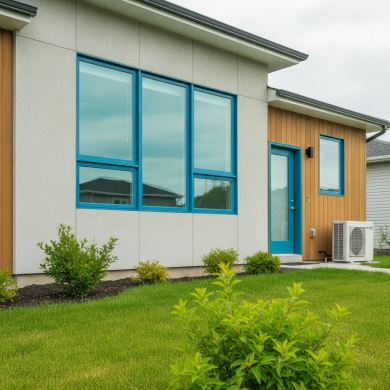
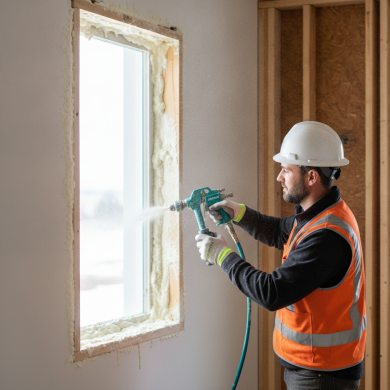
A unified alliance advocating for consistent energy standards means these thresholds are likely to rise, not fall. On publicly funded projects especially, we expect specification language to move toward higher-performance envelopes and heating systems. GCs who standardize now on high-spec components — triple-pane glazing, well-insulated wall assemblies, efficient heating — will find fewer surprises when tenders start demanding proof of performance. It's a strategic reason to keep quality tools and durable materials on the truck, whether that's our reliable VY MX4 Rotary Hammer Drill Bit for anchoring into concrete and masonry or a full envelope package.
What Small GC Owner-Operators Should Do This Year
You don't have to wait for legislation to benefit from where the ACA is pointing. We suggest three practical moves. First, tighten your prequalification file — organize your bonding, safety, and energy-documentation paperwork now, before harmonized rules make it mandatory. Second, build relationships with a supplier who can deliver coordinated, spec-ready material packages so you're not chasing four vendors on a labour-short crew. Third, stay engaged with your provincial association; the alliance's advocacy is only as strong as the local voices feeding it.
We've been supplying Maritime builds since 2017 — roughly 60 to 70 house-kit units a year — and the throughline across those projects is that early spec decisions win bids and de-risk timelines. The ACA's arrival simply raises the stakes on decisions good contractors were already making.
Key Takeaways
- The Atlantic Construction Alliance, formed April 2026 by eight associations across all four Atlantic provinces, represents 100,000+ workers (per CANS) and gives GCs a coordinated voice on procurement, workforce, and standards.
- Procurement reform may harmonize tender rules across provinces — cutting admin burden but raising the bar for energy-performance documentation.
- The workforce gap is real: immigrants are only ~3% of Atlantic construction labour vs. 21–25% elsewhere (Daily Commercial News / CANB), and the ACA is targeting a construction-focused immigration approach.
- Energy standards are tightening — NB Power offers up to $15,000 in new-home incentives, and OHPA offers up to $15,000 federally — so spec high now.
- Assembly-efficient systems like the VY 1200-Flex Kit help small crews do more with fewer trades handoffs.
Ready to Spec Ahead of the Curve?
The policy landscape is moving toward higher-performance, better-documented builds. Our team can help you assemble spec-ready material packages that meet where Atlantic Canada's standards are heading — not just where they are today. Talk to VY Build about coordinated house kits, energy-efficient envelopes, and the tools that keep your crew moving.