Maritime Building Code 2024: R-Value Requirements Guide
Maritime Building Code 2024: R-Value Requirements Guide
With rising energy costs and stricter environmental regulations across the Maritimes, understanding the 2024 building code's R-value requirements has never been more critical for construction professionals and homeowners. The updated thermal performance standards in Prince Edward Island, New Brunswick, and Nova Scotia reflect Canada's commitment to energy efficiency and climate action, but navigating these requirements can be challenging without the right guidance.
Understanding R-Values in Maritime Climate Zones
R-value measures a material's resistance to heat transfer – the higher the R-value, the better the insulation performance. The Maritime provinces fall primarily into Climate Zone 6, with some northern areas of New Brunswick reaching Zone 7. These designations directly impact minimum insulation requirements for new construction and major renovations.
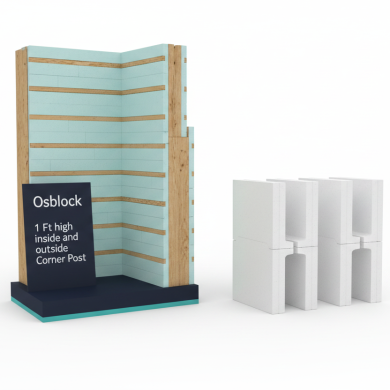
The 2024 code updates have increased minimum R-values across all building envelope components, reflecting advances in insulation technology and the region's commitment to reducing greenhouse gas emissions. For contractors working with innovative building systems like the Osblock 8 ft insulated Wood Formblock, these changes present opportunities to exceed code minimums while streamlining construction processes.
Wall Assembly R-Value Requirements
Exterior walls in Maritime Climate Zone 6 now require a minimum effective R-value of R-24, with Zone 7 areas requiring R-27. However, these are minimum standards – many projects benefit from higher performance assemblies that can achieve R-30 or better.
Traditional wood-frame construction typically relies on cavity insulation combined with continuous exterior insulation to meet these requirements. However, integrated building systems offer alternatives that can simplify construction while achieving superior thermal performance. The thermal bridging through studs in conventional framing can reduce overall wall R-values by 15-25%, making continuous insulation strategies increasingly important.
When designing wall assemblies, contractors must also consider the building's overall airtightness, as thermal performance and air sealing work together to achieve energy efficiency targets. Products like Osblock Housewrap play a crucial role in maintaining the building envelope's integrity while allowing proper moisture management.
Roof and Ceiling Insulation Standards
Ceiling assemblies under ventilated attics require R-50 in Zone 6 and R-60 in Zone 7 areas of the Maritimes. For cathedral ceilings and roof assemblies without attic spaces, the requirements are R-38 and R-42 respectively. These increased requirements reflect the significant heat loss that occurs through the building's top surface.
Flat or low-slope roofs present unique challenges, as they must accommodate both insulation and proper drainage. Continuous insulation above the roof deck is often the most effective approach, though it requires careful attention to vapor barrier placement and thermal bridging at structural connections.
The 2024 code also places greater emphasis on controlling ice damming, particularly relevant in Maritime climates where freeze-thaw cycles are common. Proper insulation and air sealing at the roof-to-wall junction becomes critical for both energy performance and building durability.
Foundation and Basement Insulation Updates
Below-grade spaces have seen significant changes in the 2024 code. Full basement walls now require R-17 insulation, while crawl spaces need R-24 in the walls or R-31 under the floor. These requirements reflect the substantial energy losses that occur through foundation assemblies.
For heated basements, insulation can be applied to the interior or exterior of foundation walls, though exterior applications generally provide superior thermal performance by reducing thermal bridging. Slab-on-grade foundations require R-12 perimeter insulation extending down 600mm or R-12 under-slab insulation extending 1200mm horizontally.
Foundation insulation must also address moisture management, as improper installation can lead to condensation and mold issues. The code requires vapor barriers in specific locations and mandates proper drainage and waterproofing systems.
Advanced Building Envelope Systems
Innovative construction methods are increasingly attractive for meeting and exceeding 2024 code requirements. Insulated concrete forms (ICFs), structural insulated panels (SIPs), and integrated building systems can achieve superior thermal performance while simplifying construction.
The Osblock innovative Lock system represents this evolution in building technology, combining structural and insulation functions in a single component. These systems can achieve continuous insulation without thermal bridging, often exceeding code minimums while reducing construction complexity.
When evaluating advanced systems, contractors should consider the total effective R-value, including thermal bridging effects, rather than just the nominal insulation value. Many integrated systems provide superior real-world performance compared to conventional construction methods.
Compliance Strategies and Best Practices
Successful code compliance starts with proper planning and product selection. Working with suppliers who understand Maritime building requirements ensures access to appropriate materials and technical support. Products like PVC Trimboard for exterior details can eliminate thermal bridging at window and door openings while providing long-term durability in Maritime weather conditions.
Documentation is crucial for code compliance. Building officials require detailed drawings showing insulation placement, vapor barrier continuity, and thermal bridge mitigation strategies. Energy modeling software can help demonstrate compliance with performance-based alternatives to prescriptive requirements.
Regular jobsite inspections ensure proper installation. Even high-performance materials won't achieve their rated R-values if installed incorrectly. Common issues include compressed insulation, gaps in the thermal envelope, and improper vapor barrier installation.
Key Takeaways
• Maritime Climate Zone 6 requires minimum R-24 walls, R-50 ceilings, and R-17 foundation insulation
• Thermal bridging can reduce wall assembly R-values by 15-25%, making continuous insulation strategies critical
• Advanced building systems like ICFs and integrated blocks can exceed code minimums while simplifying construction
• Proper documentation and installation practices are essential for achieving rated thermal performance
• Early planning with knowledgeable suppliers ensures access to code-compliant materials and technical support
Partner with Maritime Building Code Experts
Navigating the 2024 Maritime building code requirements doesn't have to be overwhelming. VY Build Inc specializes in energy-efficient construction solutions that not only meet code requirements but exceed them, helping you deliver superior buildings while streamlining your construction process. Contact our team today to discuss how our innovative building systems and expertise can support your next project's success in meeting these enhanced thermal performance standards.