OSBLOCK vs ICF: R32 Wood Formblocks vs Concrete Systems
VY Build no longer supplies OSBLOCK™ formblocks. This article is kept for reference. If your project specifies a formblock wall system, contact us and we will refer you to the manufacturer. Our current range is European windows and doors, flooring and construction materials — see our catalogue.
OSBLOCK vs ICF: R32 Wood Formblocks vs Concrete Systems
When selecting wall construction systems for energy-efficient buildings, contractors and builders often compare different formblock technologies. Two prominent approaches dominate the market: OSBLOCK's insulated wood formblock system and traditional ICF (Insulated Concrete Forms). While both offer superior thermal performance compared to conventional framing, they represent fundamentally different construction philosophies with distinct advantages for Atlantic Canada's climate conditions.
Understanding the Core Difference: Wood vs Concrete Systems
The primary distinction between OSBLOCK and ICF lies in their structural approach. OSBLOCK utilizes insulated wood formblocks with EPS insulation, creating a wall system that combines wood structural elements with continuous thermal protection. This Canadian-manufactured system, produced in Quebec, delivers R32 thermal performance through its integrated design.
ICF systems, conversely, use concrete as the primary structural element, with foam forms remaining in place after concrete curing. While ICF provides excellent thermal mass and structural strength, OSBLOCK's wood-based approach offers different performance characteristics and installation benefits.
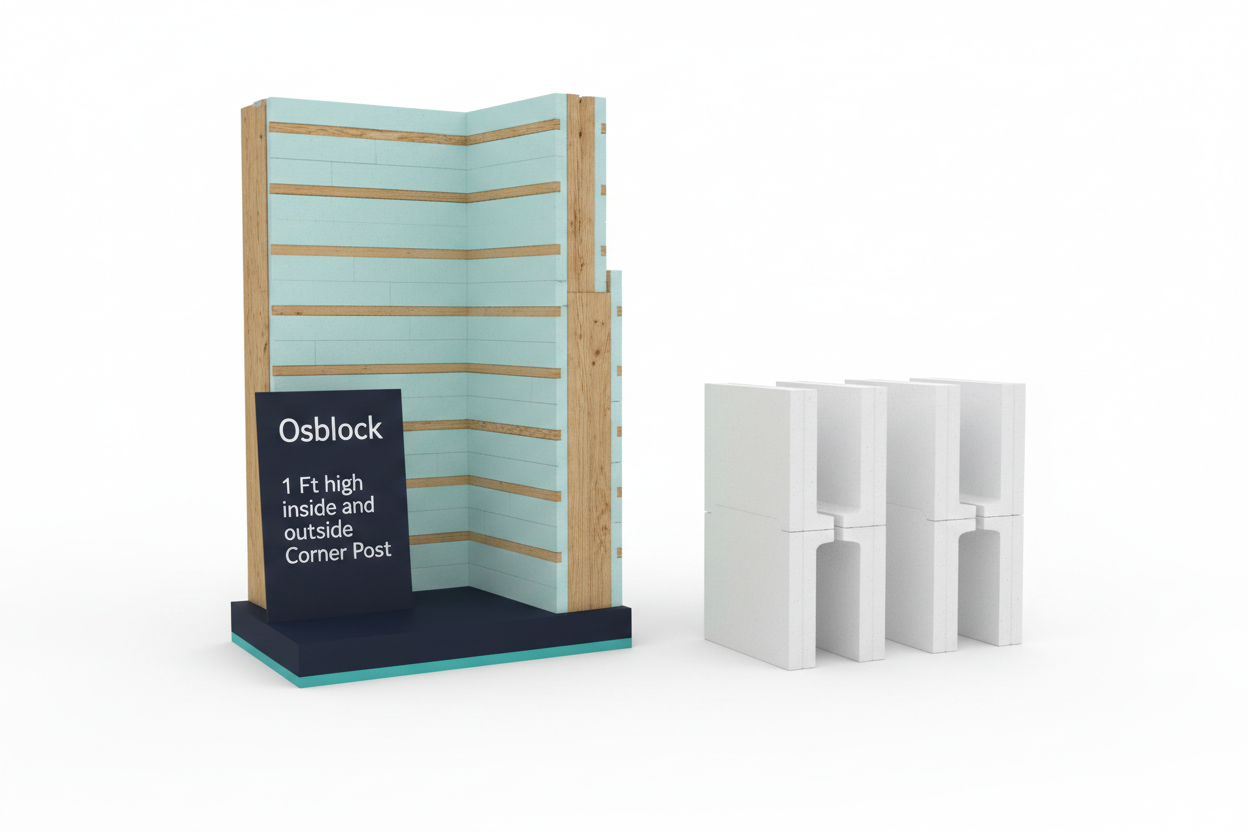
The Osblock 1 Ft high inside and outside Corner Post exemplifies the system's modular approach, providing precise corner connections that maintain thermal continuity throughout the wall assembly.
Thermal Performance: R32 Insulation Analysis
OSBLOCK's R32 rating represents exceptional thermal performance for Canadian climate zones. This insulation value results from continuous EPS insulation that eliminates thermal bridging—a critical advantage in Atlantic Canada's heating-dominated climate. The wood formblock design maintains consistent insulation thickness without the thermal breaks common in traditional construction.
ICF systems typically achieve R20-R25 ratings, depending on foam thickness and concrete core width. While ICF provides excellent thermal mass for temperature stabilization, OSBLOCK's higher R-value delivers superior steady-state thermal performance. For Atlantic Canada's extended heating seasons, this translates to measurable energy savings.
The continuous insulation approach in OSBLOCK systems addresses thermal bridging more effectively than ICF systems with concrete webs. This design advantage becomes particularly significant in Maritime climate conditions where consistent thermal performance reduces heating loads.
Installation Speed and Construction Efficiency
OSBLOCK's modular wood formblock design offers installation advantages over traditional ICF systems. The lightweight components require less heavy equipment and can be handled by smaller crews. Corner posts and connecting elements snap together systematically, creating a building envelope that's ready for electrical and mechanical systems without additional framing.
ICF installation requires concrete pumping equipment, rebar placement, and precise bracing during concrete pours. While ICF systems create robust structural walls, the multi-step process extends construction schedules. OSBLOCK's wood-based system allows immediate progression to trades work once the wall assembly is complete.
The integrated approach of OSBLOCK components, including specialized corner posts, streamlines the construction sequence. Contractors can achieve weather-tight building envelopes faster than traditional ICF methods, reducing exposure to Atlantic Canada's variable weather conditions during construction.
Cost-Effectiveness and Material Considerations
From a material cost perspective, OSBLOCK wood formblocks typically cost less per square foot than ICF systems. The elimination of concrete, rebar, and heavy equipment reduces direct material and installation costs. Additionally, OSBLOCK's Canadian manufacturing provides supply chain advantages for Atlantic builders, reducing transportation costs and delivery complexity.
ICF systems require concrete placement, which involves material costs, equipment rental, and specialized labor. While ICF provides excellent structural performance, the total installed cost often exceeds OSBLOCK systems when considering labor, equipment, and material expenses.
OSBLOCK's wood-based approach also offers flexibility for modifications and renovations. Unlike concrete ICF walls, wood formblock systems accommodate electrical and plumbing changes without specialized cutting equipment or structural concerns.
Structural Performance in Atlantic Climate
Both systems excel in Atlantic Canada's wind and seismic conditions, though through different mechanisms. OSBLOCK's wood formblock design provides excellent lateral strength while maintaining thermal performance. The integrated corner posts and connection system creates a continuous structural envelope suited to Maritime wind loads.
ICF systems offer superior mass and impact resistance, particularly beneficial in extreme weather conditions. However, OSBLOCK's engineered wood components provide adequate structural performance for residential and light commercial applications while delivering superior thermal efficiency.
The wood-based nature of OSBLOCK systems also provides better nail-holding capacity for siding attachments compared to ICF systems, which require specialized fasteners for exterior cladding applications.
Environmental Impact and Sustainability
OSBLOCK's Canadian manufacturing and wood-based composition offer environmental advantages over concrete-intensive ICF systems. Wood represents a renewable resource with lower embodied energy compared to concrete production. The Quebec manufacturing base reduces transportation emissions for Atlantic Canada projects.
ICF systems require significant concrete usage, which carries higher embodied carbon. While both systems deliver energy efficiency during building operation, OSBLOCK's wood formblock approach provides better lifecycle environmental performance.
The R32 insulation performance of OSBLOCK systems also contributes to long-term carbon footprint reduction through decreased heating energy consumption in Atlantic Canada's climate.
Key Takeaways
• OSBLOCK wood formblocks deliver R32 thermal performance, exceeding typical ICF R20-R25 ratings
• Installation speed advantages make OSBLOCK systems cost-effective for Atlantic Canada builders
• Wood-based construction provides modification flexibility and environmental benefits over concrete systems
• Canadian manufacturing in Quebec offers supply chain advantages for Maritime projects
• Corner post systems maintain thermal continuity while simplifying installation complexity
If your project specifies OSBLOCK
OSBLOCK is no longer part of the VY Build range. If a formblock wall system is the right answer for your project, contact us and we will point you to OSBLOCK directly — and we supply the European windows, doors and flooring that go around the wall.