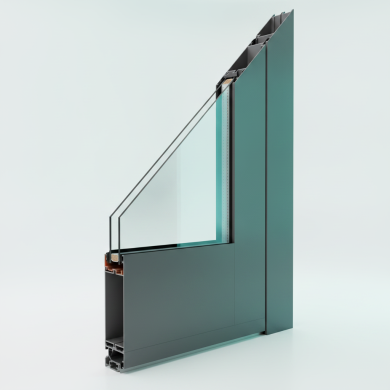
Sell the Impossible: Building a DIY AR Showroom for Vybuild Products
Selling high-performance construction technology—whether it is Osblock insulated forms, European tilt-and-turn windows, or VY Flex modular housing—often hits a critical barrier: the client’s imagination. While technical specifications regarding R-values and thermal breaks are compelling to engineers, homeowners struggle to visualize how a modular unit fits physically in their backyard or how a specific window profile integrates with their existing siding. This article outlines a practical, digital-first sales strategy: creating a DIY Augmented Reality (AR) showroom. Unlike expensive enterprise software, we focus on a low-cost, high-impact workflow using accessible tools like Polycam and Sketchfab. We will explore how contractors and showroom staff can deploy these visualizations in a single weekend, transforming intangible specs into immersive, in-home experiences that accelerate decision-making, reduce scope creep, and significantly lower the friction associated with high-value upgrades.
The Visualization Gap in High-Performance Construction
The primary friction point in selling advanced building products is not price, but uncertainty. When a client cannot perceive the scale, finish, or spatial impact of a product, they default to conservative, lower-cost options. Augmented Reality bridges this gap by moving the sales experience from the showroom floor to the client’s actual environment. By allowing a homeowner to place a digital twin of a VY Flex House in their garden, the conversation shifts from abstract dimensions to tangible utility.
Business Value of AR in Construction Sales:
- Reduced Decision Friction: Clients can verify fit and aesthetics instantly, removing the "what if it doesn’t fit" anxiety that delays signing.
- Lower Return Rates: Visualization confirms alignment on aesthetics and scale before materials are ordered, acting as a visual contract.
- Upsell Acceleration: High-performance upgrades (e.g., triple-pane glazing thickness) become visible assets rather than just line items on a quote.
Retail giants like IKEA have proven this model increases conversion rates. For Vybuild products, where the value lies in engineering and structural integrity, AR provides the necessary visual context to justify the investment. It transforms the sales process from a lecture on building science into a collaborative design session.
The Agile AR Tech Stack: Tools and Formats
Building an AR showroom does not require custom app development. The modern mobile web ecosystem supports high-fidelity 3D rendering natively. The strategy relies on a "lean" tech stack that prioritizes speed and compatibility over complex interactivity.
Core File Formats:
- glTF / GLB (The "JPEG of 3D"): The standard for Android and web viewing. It is compact and retains texture data.
- USDZ: The proprietary format required for Apple’s AR Quick Look. This allows iPhone users to place objects without installing an app.
Recommended Toolchain:
| Function | Tool | Cost/Access |
| Capture/Scan | Polycam / RoomScan | Low cost; utilizes LiDAR on Pro iPhones for rapid photogrammetry of existing modules. |
| Optimization | Blender | Free; essential for reducing polygon count and baking textures to ensure mobile performance. |
| Conversion | Reality Converter | Free (Mac); essential for converting GLB assets into USDZ for iOS compatibility. |
| Hosting | Sketchfab / Shopify | Freemium/Paid; Sketchfab offers a built-in AR viewer that works across browsers. |
The goal is to produce lightweight models (under 10MB) that load instantly on a client’s 4G connection. Heavy, unoptimized CAD files will crash browsers and kill the sale; optimization is the most critical step in this technical workflow.
Sourcing and Optimizing Vybuild 3D Assets
Contractors often assume they need to model everything from scratch. This is inefficient. The most effective workflow combines supplier data with rapid photogrammetry. For standardized products like Osblock forms or European window profiles, request CAD or FBX files directly from the manufacturer. These files contain precise dimensions but often excessive internal geometry (screws, internal channels) that must be removed (decimated) in Blender.
The Photogrammetry Workaround:
For unique items or showroom exclusives, use Polycam to scan the object. Place the object in even lighting, walk around it slowly while recording, and let the software process the mesh. This creates a photo-realistic surface that often looks more "real" to clients than a sterile CAD render because it captures how light interacts with the material texture.
Optimization Checklist for Mobile AR:
- Target Polycount: Keep models between 2,000 and 10,000 polygons.
- Textures: Bake lighting and ambient occlusion into a single texture atlas (2K resolution max).
- Scale: Verify physical scale in meters before export. A window that renders at 2x size will destroy trust immediately.
The Showroom Floor: Staging and Sales Scripts
Technology is useless without a deployment script. The "Measure-First" approach is a psychological tactic that positions the salesperson as a consultant rather than a pusher. By starting the demo with a measurement tool, you establish accuracy and professional diligence before introducing the "wow" factor of AR.
The 2-Minute Showroom Demo Script:
- The Setup: "Let’s see exactly how that Osblock foundation would sit on your site. I’ll scan the area to get the dimensions right." (Use Apple Measure or AR measure tool).
- The Anchor: "I am placing the corner right here at the property line." (Anchoring the model provides spatial context).
- The Reveal: "Now, walk around it. You can see how the insulation creates that thermal break we discussed."
- The Closing Action: "I’ll take a photo of this placement and include it in your quote so you have the visual reference."
Staging Tips: Always include a subtle shadow plane beneath the model. Without a shadow, objects appear to float, breaking the immersion. Ensure the model has anchors set for vertical surfaces (for windows) or horizontal planes (for modular units) so they snap correctly to the real world.
Weekend Implementation: The 8-Step Workflow
This strategy is designed for speed. A dedicated contractor or marketing lead can implement a functional AR pilot in a single weekend. The focus is on getting a "Minimum Viable Experience" into the hands of sales staff immediately.
Saturday: Asset Creation
- 09:00: Gather existing CAD files or perform Polycam scans of three key products (e.g., one window, one wall section, one modular unit).
- 13:00: Import assets to Blender. Decimate geometry and bake textures.
- 17:00: Export to GLB and convert to USDZ. Test on an iPhone and an Android device to ensure scale is 1:1.
Sunday: Deployment & Training
- 10:00: Upload models to Sketchfab or embed in a hidden page on your company website using the <model-viewer> tag.
- 13:00: Generate QR codes linking directly to the AR view. Print these on cardstock for the showroom.
- 15:00: Train one staff member on the "Measure-First" script. Roleplay the anchoring process until it is smooth.
- 17:00: Set up a simple tracking sheet to record demo-to-quote conversion rates starting Monday.
By Monday morning, the sales team is equipped with a tool that differentiates them from 90% of competitors who rely solely on paper brochures and static samples.
Conclusion
Implementing a DIY AR showroom for Vybuild products is not about mastering complex code; it is about reducing the cognitive load on your client. By following the 8-step weekend workflow—ranging from strategic asset sourcing with Polycam to optimized hosting on Sketchfab—contractors can deploy a powerful sales tool that makes high-performance building science tangible. This approach shifts the conversation from abstract costs to visible value, allowing homeowners to see the thermal efficiency of Osblock or the aesthetic precision of European windows in their own space. As the construction industry digitizes, those who bridge the gap between technical specifications and client imagination through accessible AR will secure a distinct competitive advantage, driving higher conversion rates and faster project approvals.