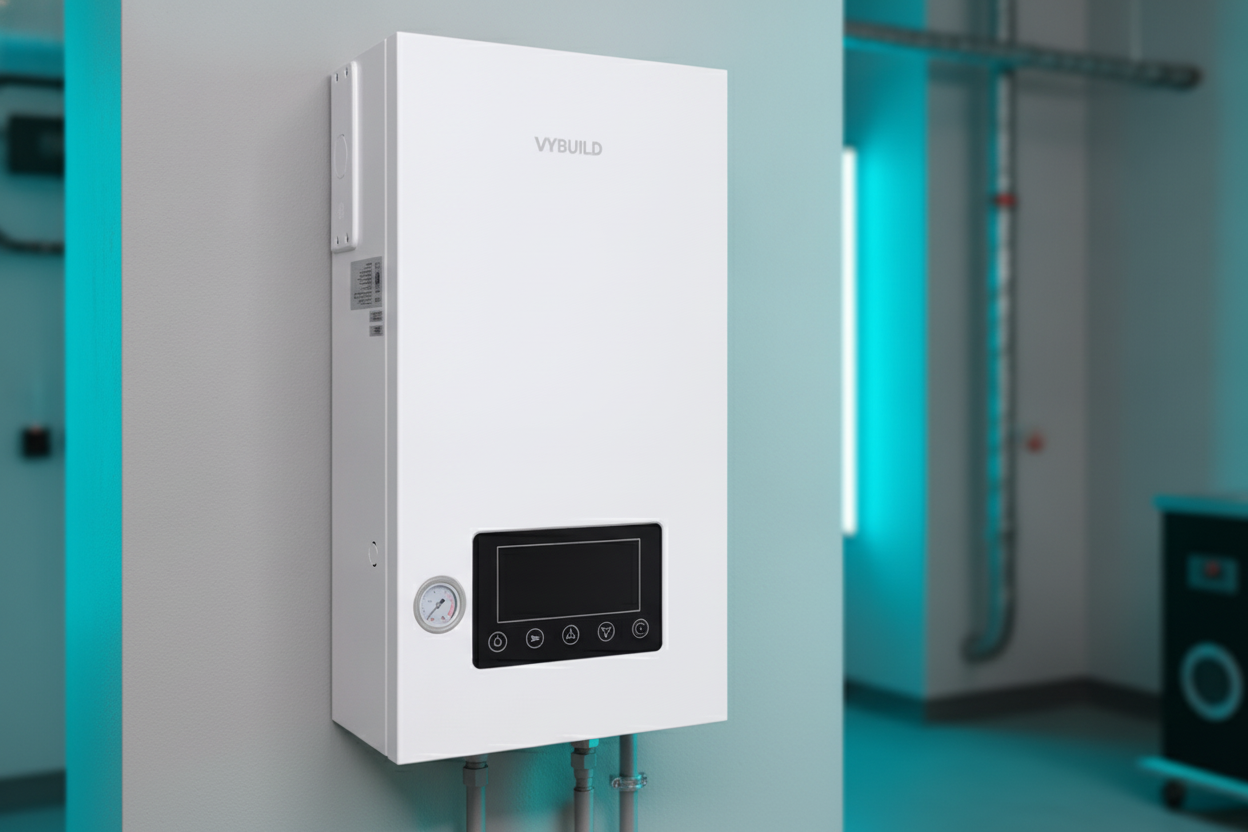
VY-BM180 Electric Boiler: 5 Radiant Heat Myths
VY-BM180 Electric Boiler: 5 Radiant Heat Myths Debunked
Across Prince Edward Island, New Brunswick, and Nova Scotia, radiant electric heating carries a reputation problem. Homeowners hear "electric heat" and immediately picture sky-high winter bills. Contractors assume electric boilers can't be zoned, or that they're incompatible with the heat pumps everyone is installing. These assumptions aren't just outdated — they can steer a build toward the wrong mechanical system entirely.
At VY Build, we supply the VY-BM180 Electric Boiler precisely because its real specifications contradict so many of these persistent misconceptions. Below, we take five of the most common radiant heat myths and test them against what the VY-BM180 actually does. Let's separate the folklore from the datasheet.
Myth 1: "Electric Radiant Heat Is Always Expensive to Run"
This is the myth that drives the most bad decisions. The truth is that operating cost depends on three factors: the efficiency of the heating element, how tightly you can control output, and how well the building envelope holds heat.
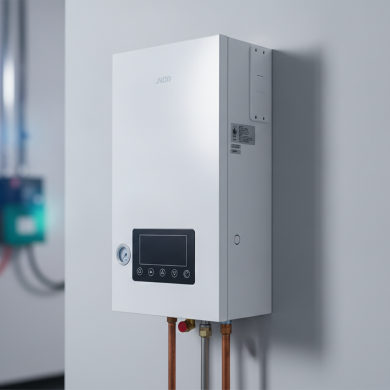
The VY-BM180 uses a unique patented heating element engineered for high heating efficiency inside a closed waterway system. Because it heats water directly and circulates it through the radiant loop — rather than pushing hot air through leaky ducts — very little energy is wasted between generation and delivery. Our catalog positions this boiler as a fossil-fuel-free central heating and domestic hot water solution, and when it's paired with a well-insulated shell, the running cost story changes dramatically.
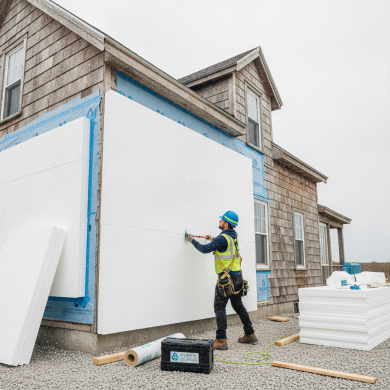
That envelope point matters. A boiler working inside a high-R structure simply runs less often. The cost misconception in Nova Scotia and its neighbours usually comes from comparing an efficient boiler against an inefficient 1980s envelope — not a fair fight, and not the reality of a modern build.
Myth 2: "Electric Boilers Can't Be Zoned"
Zoning — heating only the rooms in use, at the times they're used — is the single biggest lever on comfort and cost. The persistent belief that electric boilers are all-or-nothing is simply false.
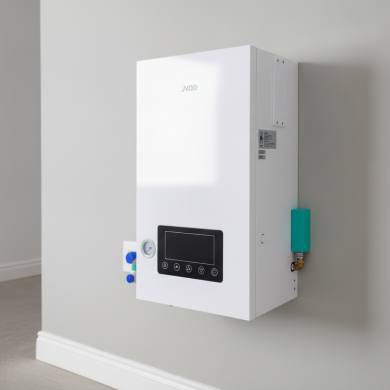
The VY-BM180 supports WiFi control by connecting to a room thermostat or an app. That means schedule-based and room-based control from your phone, letting you dial back bedrooms during the day and living areas overnight. Combined with its touch-key interface and LED display, the unit gives both installers and homeowners granular oversight rather than a single blunt on/off.
We carry this model specifically because that level of digital control answers the "zone control Atlantic" question our contractor customers ask most. A boiler you can tune remotely behaves nothing like the fixed-output baseboard heaters it's so often confused with.
Myth 3: "Baseboard Heat and Boiler Heat Are Basically the Same Thing"
Electric baseboard is convection: it heats the air, which rises, cools, and drops, creating temperature stratification and cold floors. A hydronic radiant system driven by a boiler distributes warmth through water loops, delivering more even heat across a surface.
The VY-BM180 is a single heating system that comes equipped with a circulation pump and expansion vessel — the components that make hydronic distribution work — already integrated. That integration is part of why we describe it as easy to install: the installer isn't sourcing and matching separate pumps and vessels. When contractors weigh electric boiler vs baseboard heat, the distinction isn't marketing; it's the difference between convective air heating and controlled water-borne radiant delivery.
Myth 4: "An Electric Boiler Can't Work Alongside a Heat Pump"
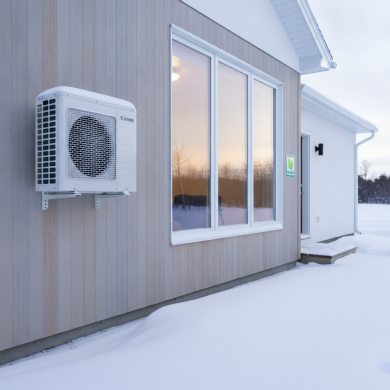
This myth is costing Atlantic homeowners rebate money. Heat pumps are efficient in shoulder seasons but lose capacity in deep cold; a common design pattern is a heat pump for the bulk of the season with a boiler handling peak-demand backup and domestic hot water.
The VY-BM180 can connect with an indirect water heater or buffer tanks for domestic hot water, which is exactly the architecture that lets it live alongside a heat pump rather than competing with it. The buffer tank becomes shared thermal storage; the boiler covers what the heat pump can't on the coldest nights. For the electric boiler heat pump combo question, the answer is not only "yes" but "this is the recommended configuration."
On incentives: rebate programs across Nova Scotia, New Brunswick, and PEI evolve frequently, so we always tell customers to confirm current eligibility and status directly with the administering agency before specifying equipment. Program names and funding windows change — verify before you rely on them.
Myth 5: "Electric Boilers Need Constant Babysitting in Winter"
The fear here is a frozen or failed system while you're away — a genuine concern in a Maritime February. The VY-BM180 is built to manage this without a caretaker.
It includes an automatic anti-freezing function, double dry-heating protection, and a fault auto-detection technique, all running as background safety mechanisms. It's ETL certified and delivers performance from 12 kW to 18 kW, and it runs at ultra-low noise. Our engineering-minded product team highlights these automation features because they're what make the unit genuinely reliable for an unattended second home or a rental property, not just an occupied primary residence.
The Bigger Picture: Electrified Heat and Atlantic's Building Boom
The shift toward electric heating isn't happening in a vacuum. According to CMHC's Summer 2025 Housing Market Outlook, construction is projected to stay strong in Atlantic Canada through 2025–2026 even as national housing starts soften — and Statistics Canada's 2025 New Housing Market Report shows for-sale housing starts in the Atlantic region rose 10% year-over-year, with single-detached homes making up 66% of new starts.
That matters for heating choices because the newly published National Energy Code of Canada for Buildings 2025 (NECB 2025), released by the NRC, introduces an energy-use-intensity compliance path and a framework aimed at cutting operational GHG emissions. Signatory Atlantic provinces must adopt it within 18 months — by late June 2027. Fossil-fuel-free, high-efficiency hydronic heating fits squarely into where the code is heading.
Key Takeaways
- Cost is about efficiency + control + envelope — the VY-BM180's patented high-efficiency element in a closed waterway system, paired with a tight R32 OSBLOCK™ shell, undercuts the "electric is expensive" myth.
- Zoning is built in — WiFi/app and room-thermostat control give room-by-room and schedule-based management.
- Radiant ≠ baseboard — an integrated circulation pump and expansion vessel deliver even hydronic heat, not stratified convective air.
- Heat pump compatible — buffer tank and indirect water heater connections make the electric boiler heat pump combo the recommended peak-and-DHW configuration.
- Low-maintenance safety — automatic anti-freeze, double dry-heating protection, fault auto-detection, and ETL certification across a 12–18 kW range.
Ready to Spec Electric Radiant Correctly?
Don't let outdated myths dictate your mechanical design. Explore the full specifications of the VY-BM180 Electric Boiler and talk to our team about pairing it with a heat pump and a high-R envelope for your next PEI, New Brunswick, or Nova Scotia build.