Circular Economy Construction Materials: 2030 Market Impact
Circular Economy Construction Materials: 2030 Market Impact
Canada's construction sector stands at the threshold of a fundamental transformation. Market share analysis indicates the circular economy could represent nearly 15% of Canada's construction materials market by 2030. This shift from the traditional "take-make-dispose" model to circular practices is reshaping how we source, use, and manage construction materials across Atlantic Canada and beyond.
The concept extends far beyond simple recycling. In a circular economy, nothing is waste. It's about keeping valuable resources in active use, creating closed-loop systems where materials maintain their value across multiple lifecycles. For builders and contractors in Prince Edward Island, New Brunswick, and Nova Scotia, this represents both an opportunity and a necessity as resource costs continue climbing.
Steel Recycling: Leading the Circular Revolution
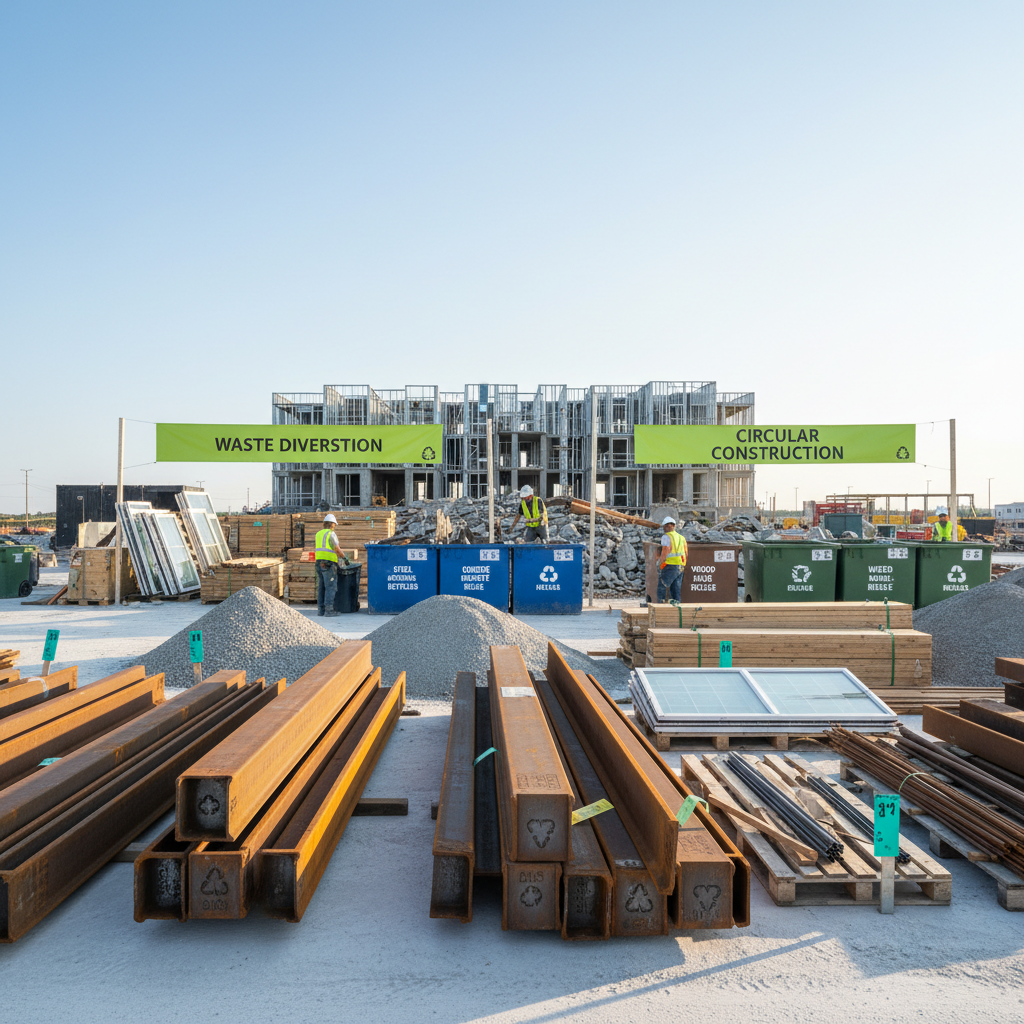
Steel stands as the poster material for circular construction practices. According to a metal-recycling summary: "Canada recycles 90% of structural steel from construction sites," making structural steel among the most recycled materials in Canadian construction. The numbers are impressive: One study indicates Canada already recycles about 16–18 million tonnes of steel each year across sectors.
The environmental impact proves equally compelling. The mature steel recycling industry is complemented by an emerging "reuse" market (reusing structural steel members rather than remaking them) which can cut embodied carbon by up to 97% versus virgin steel. For contractors prioritizing sustainability metrics, this represents a clear path to reduced project carbon footprints.
Sustainability branding: Developers and architects in Canada increasingly highlight the use of recycled steel as part of their ESG (Environmental, Social, Governance) strategy. It's a signal to clients and communities that the project is "doing the right thing." The industry mindset shift: The shift from "virgin steel only" to "recycled steel acceptable (and preferred)" is gaining traction.
Construction Waste: The Hidden Opportunity
Construction, renovation and demolition (CRD) waste represents a significant portion (4 million tonnes or 12%) of the solid waste stream generated in Canada. Yet current diversion rates remain disappointingly low. Ontario's industrial, commercial and institutional (IC&I) sectors, including construction and demolition, divert just over 13 per cent of their wastes.
This gap represents enormous potential. This 2023 report explores the systems and secondary markets that foster demand for reclaimed materials and quantifies the economic and environmental impacts of increased C&D waste diversion in Canada. We've seen promising examples emerge across Atlantic provinces, where local contractors partner with waste processing facilities to recover structural timber, aggregates, and metals from demolition projects.
Material flow: Reintegrating Wood from the Construction, Renovation and Demolition (CRD) Sector includes Sources to Products and Incorporating Recycled Content and Beyond the Landfill: Tiny Houses As An Opportunity For Higher Value Usage of CRD Wood Waste. These federal research initiatives demonstrate growing policy support for circular construction practices.
Advanced Material Recovery Technologies
Rapid innovation in material recycling technologies such as reclaimed concrete, recycled steel, and bio-based composites is enhancing performance and market viability. The technology landscape continues evolving rapidly, with automated sorting systems and blockchain verification improving material authenticity and traceability.
These materials encompass a diverse range of products and strategies, including high-value reclaimed timber and structural steel, concrete incorporating recycled aggregates, modular building components designed for disassembly, and innovative bio-based composites. The core objective is to maximize material longevity and utility while drastically reducing the extraction of virgin resources.
Bio-based materials represent another growth vector. In the evolving construction materials market, bio-based products are reshaping how we approach sustainability. Hempcrete, bamboo panels, and straw composites are gaining traction for their durability and low embodied carbon. These structural materials absorb CO₂ during growth, improving the sustainability of new construction projects while keeping interiors healthy and moisture-resistant.
Regional Implementation Challenges and Solutions
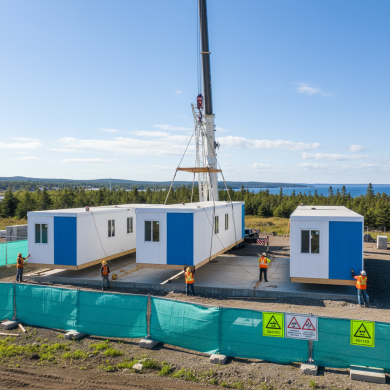
Atlantic Canada faces unique logistics challenges in implementing circular construction practices. Rural project locations and smaller market scales can complicate material recovery efforts. However, our regional focus on prefabricated construction systems like the VY 1200-Flex House Kit and VY 1500-Flex House Kit creates opportunities for standardized material reuse protocols.
Based on a material flow analysis, the construction sector was identified as a high priority sector with high material consumption rates. The City of Toronto's waste utility manages a small portion of CRD waste, relative to the amount of waste being generated within its borders. This pattern likely holds across Atlantic Canada's smaller urban centers, suggesting significant untapped potential.
Government funding increasingly supports circular initiatives. The Accelerating Circularity in Construction Materials Grants provide up to $100,000 to support projects that reduce construction, renovation, and demolition (CRD) waste through circular economy solutions. The program funds feasibility studies, infrastructure planning, and capacity-building initiatives that improve material recovery and reduce environmental impact.
Economic Drivers and Market Forces
In addition, the rising costs of raw materials have made recycled alternatives more financially attractive. Recent data from Statistics Canada shows construction costs rose 3.7% year-over-year in Q4 2024, with builders citing skilled labour shortages and building code changes as key cost drivers. This price pressure makes circular material sourcing increasingly competitive.
This model not only supports energy efficiency goals but also fosters resilience against supply-chain disruptions. For construction companies aiming to meet government regulations, reuse-based sourcing provides both cost savings and environmental credibility in a changing competitive landscape.
The global market outlook remains strong. Circular construction materials market size was estimated at USD 90.92 billion in 2024 and is projected to reach USD 217.91 billion by 2033, growing at a CAGR of 10.2% from 2025 to 2033.
Future Outlook: 2030 and Beyond
The adoption of circular construction materials is accelerating globally, supported by evolving regulatory frameworks, green building certification systems, and growing stakeholder demand for sustainable development practices. Canada's commitment becomes clearer through policy initiatives. The Government of Canada has committed over $25 million to Canadian small and medium-sized businesses to establish Canada as a global leader in government operations that are low-carbon, resilient and green, including the adoption of circular economy solutions.
Transitioning to circularity has the potential to generate $4.5 trillion in global benefits (according to Accenture Strategies). For Atlantic Canada's construction sector, this transformation represents more than environmental responsibility—it's a competitive advantage requiring early adoption and systematic implementation.
Advanced building envelope solutions like our VY Energy Recovery Ductless Ventilator demonstrate how circular thinking extends beyond materials to system-level efficiency. When buildings operate at peak performance, material lifecycles naturally extend through reduced replacement cycles.
Key Takeaways
• Market transformation is accelerating: Circular construction materials could represent 15% of Canada's market by 2030, driven by cost pressures and regulatory requirements
• Steel leads material recovery: Canada already recycles 90% of structural steel from construction sites, with emerging reuse markets cutting embodied carbon by up to 97%
• Waste diversion remains underdeveloped: Construction and demolition waste represents 12% of Canada's solid waste stream, with current diversion rates below 15%—indicating massive opportunity
• Government funding supports transition: New federal grants up to $100,000 specifically target circular construction material projects, while broader circular economy initiatives receive $25+ million in support
• Regional advantages emerging: Atlantic Canada's focus on prefabricated construction systems creates natural opportunities for standardized circular material protocols
Ready to integrate circular construction principles into your next project? VY Build Inc. offers comprehensive building solutions designed for efficiency and sustainability. From complete house kits to advanced building envelope systems, we help Atlantic Canada builders reduce waste while maximizing performance. Contact our team to discuss how circular economy approaches can benefit your specific project requirements.