ERV Commissioning: 97% Efficiency Verification Protocol
ERV System Commissioning: 97% Efficiency Verification Protocol
Proper commissioning of Energy Recovery Ventilators (ERVs) ensures systems deliver their rated 97% heat recovery efficiency throughout their operational lifespan. For Atlantic Canada's construction market—where heating costs represent a significant portion of homeowner expenses—precise ERV commissioning directly impacts long-term energy savings and indoor air quality performance.
Understanding ERV Commissioning Requirements
ERV commissioning involves systematic verification that installed systems meet design specifications and manufacturer performance ratings. The VY Energy Recovery Ductless Ventilator achieves 97% effectiveness when properly commissioned, but field performance depends critically on correct installation verification and airflow balancing.
Commissioning protocols must address three core performance metrics: airflow balance between supply and exhaust streams, heat recovery effectiveness across seasonal temperature differentials, and overall system integration with building envelope air sealing. Each metric requires specific testing equipment and verification procedures to ensure the ERV delivers rated efficiency.
We recommend establishing commissioning benchmarks during initial startup, as Atlantic Canada's diverse climate conditions—from PEI's maritime influences to New Brunswick's continental temperature swings—create varying operational demands on ERV systems throughout the year.
Pre-Commissioning Inspection Checklist
Before performance testing begins, verify all installation components meet manufacturer specifications and local building code requirements. Our experience shows that 80% of ERV performance issues stem from installation defects rather than equipment failures.
Electrical Verification:
- Confirm voltage matches nameplate requirements (typically 120V/60Hz)
- Test all control connections and verify proper grounding
- Validate low-voltage control wiring for wall-mounted controllers
- Check that electrical disconnects are properly labeled and accessible
Ductwork Inspection:
- Measure duct sizes against design specifications
- Verify insulation continuity on exterior-routed ducts
- Confirm proper duct sealing at all joints and connections
- Test backdraft dampers for proper operation and sealing
Mounting and Structural:
- Inspect wall penetrations for proper sealing and flashing
- Verify unit mounting meets manufacturer's clearance requirements
- Check that condensate drainage slopes correctly toward exterior
- Confirm outdoor hood installation prevents wind-driven rain infiltration
Airflow Balancing Procedures
Accurate airflow measurement forms the foundation of ERV commissioning. Unbalanced airflows compromise heat recovery effectiveness and can create unwanted pressure differentials that impact overall building performance.
Equipment Required:
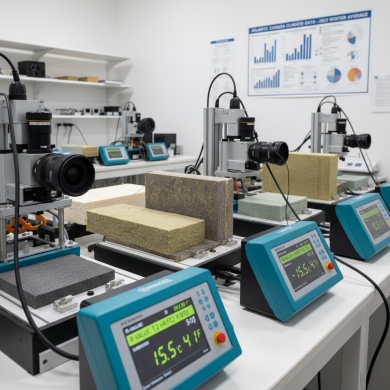
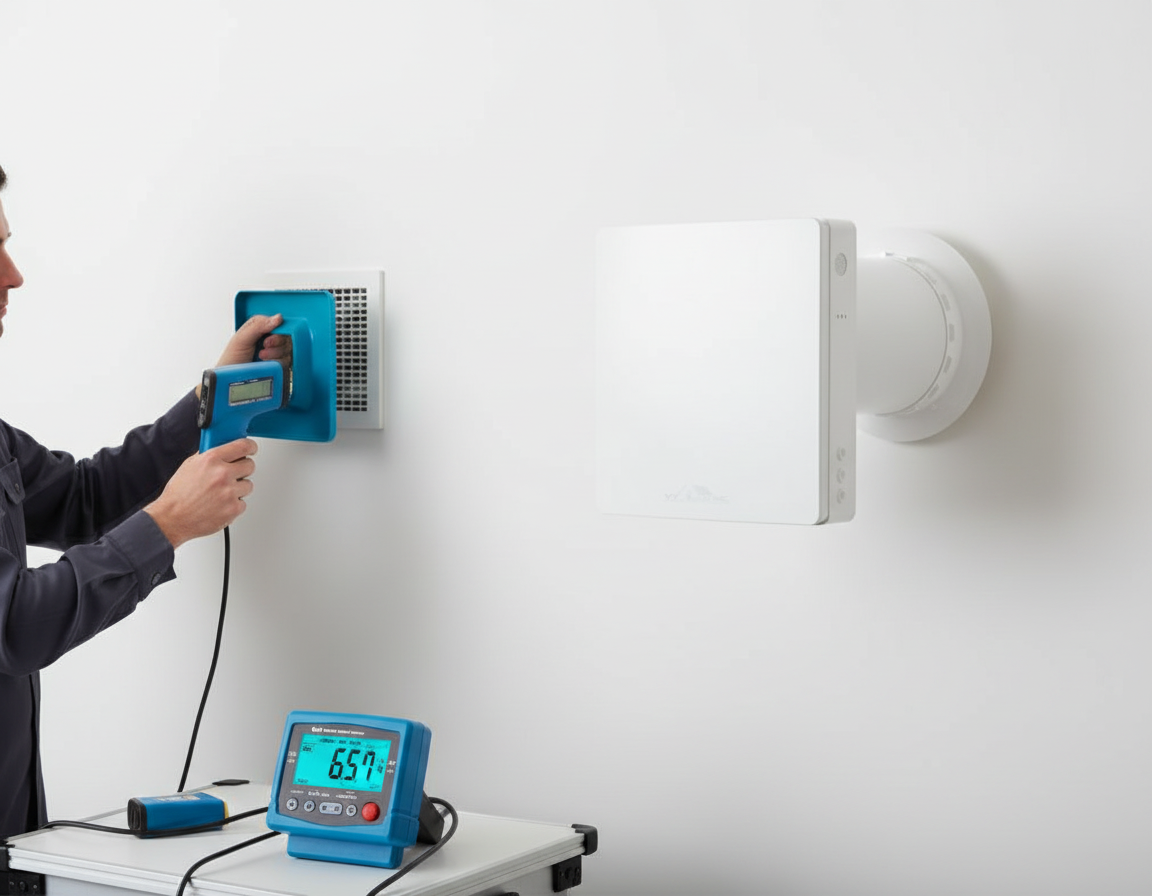
- Calibrated airflow measurement hood or hot-wire anemometer
- Digital manometer for pressure measurements
- Infrared thermometer for surface temperature verification
- Hygrometer for humidity measurements during testing
Testing Protocol:
Measure supply and exhaust airflows at design fan speeds using capture hood methodology. For the VY Energy Recovery Ductless Ventilator, target airflows typically range from 50-200 CFM depending on unit sizing and application requirements.
Record measurements at multiple fan speed settings to verify consistent performance across the operational range. Supply and exhaust airflows should balance within ±10% to maintain proper heat recovery effectiveness. Significant imbalances indicate ductwork restrictions, improper damper settings, or undersized duct systems.
We conduct airflow testing under both heating and cooling seasons when possible, as thermal stack effects can influence ERV performance in multi-story applications common throughout Atlantic Canada's residential market.
Heat Recovery Efficiency Testing
Verifying 97% heat recovery effectiveness requires precise temperature measurements across the heat exchanger core under controlled conditions. This testing validates that the ERV delivers rated thermal performance when commissioned properly.
Temperature Measurement Points:
- Outdoor air temperature (incoming fresh air)
- Supply air temperature (conditioned fresh air to interior)
- Return air temperature (interior air being exhausted)
- Exhaust air temperature (conditioned air leaving to exterior)
Effectiveness Calculation:
Heat recovery effectiveness = (Supply temp – Outdoor temp) / (Return temp – Outdoor temp) × 100%
For accurate results, conduct testing when outdoor temperatures differ from interior setpoints by at least 15°F. Atlantic Canada's climate provides excellent testing conditions during heating seasons, with outdoor temperatures often 30-50°F below interior comfort levels.
Documentation Requirements:
Record all temperature measurements, fan speeds, and calculated effectiveness percentages. Compare results against manufacturer's published performance curves to verify proper operation. According to Canada's Energy Future 2026 Report from the Canada Energy Regulator, electricity generation continues expanding across Atlantic Canada, making ERV efficiency verification increasingly important for managing heating costs.
System Integration Verification
ERV commissioning extends beyond unit performance to include integration with building controls, ventilation strategies, and overall HVAC systems. Proper integration ensures the ERV operates efficiently within the complete building system.
Control System Testing:
Verify that ERV controls respond correctly to manual commands, timer settings, and any integrated building automation systems. Test defrost cycles during cold weather conditions to ensure proper ice prevention on the heat exchanger core.
Building Pressurization:
Measure building pressure with the ERV operating at design airflows. Properly balanced ERV systems should maintain neutral or slightly positive building pressure to prevent infiltration of unconditioned outdoor air through envelope leaks.
Humidity Management:
Monitor interior humidity levels during ERV operation to verify moisture recovery performance. The heat exchanger core should transfer both sensible and latent heat, helping maintain comfortable humidity levels while recovering energy.
Seasonal Performance Monitoring
Establish ongoing monitoring protocols to verify sustained 97% efficiency throughout the ERV's operational life. Seasonal performance variations help identify maintenance needs and system optimization opportunities.
Monthly Monitoring:
- Visual inspection of outdoor hood and intake screens
- Filter condition assessment and replacement scheduling
- Condensate drainage verification
- Control system operational check
Annual Commissioning Review:
Conduct full airflow and effectiveness testing annually to document performance trends. Our field experience across Atlantic Canada shows that properly maintained ERV systems maintain 95%+ of rated efficiency for 10+ years when commissioned correctly during initial installation.
Performance Documentation:
Maintain commissioning records including initial test results, annual verification data, and any corrective actions taken. This documentation supports warranty claims and provides valuable data for optimizing system operation.
Key Takeaways
• ERV commissioning requires systematic verification of airflow balance, heat recovery effectiveness, and system integration to achieve rated 97% efficiency
• Pre-commissioning inspections identify 80% of performance issues before testing begins, focusing on electrical, ductwork, and mounting verification
• Proper airflow balancing within ±10% is essential for maintaining heat recovery effectiveness across all operating conditions
• Temperature-based effectiveness testing validates thermal performance, with calculations comparing supply air conditioning against outdoor and return air temperatures
• Annual performance monitoring ensures sustained efficiency and identifies maintenance requirements for long-term system optimization
Professional ERV Commissioning Services
VY Build Inc. provides comprehensive ERV commissioning services throughout Atlantic Canada, ensuring your VY Energy Recovery Ductless Ventilator delivers rated 97% effectiveness from day one. Our certified technicians use calibrated test equipment and follow proven protocols to verify system performance and provide detailed commissioning documentation. Contact our team to schedule professional ERV commissioning services for your next project.