Deep Energy Retrofits: The 50% Threshold Explained
Deep Energy Retrofits: The 50% Reduction Threshold Explained
If you've heard the term "deep energy retrofit" thrown around at a job site or in a rebate brochure, you might assume it just means a big renovation. It doesn't. In Canada, a deep energy retrofit (DER) has a specific performance bar — and most renovations that feel substantial fall well short of it. For contractors and homeowners across Prince Edward Island, Nova Scotia, and New Brunswick, understanding the difference between a surface-level upgrade and a true DER is the difference between trimming a heating bill and fundamentally re-engineering how a home performs through an Atlantic winter.
This is an educational breakdown of what the 50% threshold actually requires, why the building envelope comes first, and how to sequence the work in a cold-climate context.
What "Deep Energy Retrofit" Actually Means in Canada
There is no single legislated definition, but the industry has converged on a clear benchmark. Green Communities Canada, drawing on Natural Resources Canada's EnerGuide data, defines a deep retrofit as one that produces total energy savings of 50% or greater, regardless of starting point. Sustainable Buildings Canada uses a hybrid version of the same idea: it combines a threshold metric of a 50% reduction with an activity metric requiring envelope upgrades alongside mechanical and active-system upgrades, where the 50% reduction is a target but envelope upgrades are a requirement.
That distinction matters. A DER is not defined by how much you spend or how many rooms you touch — it's defined by measured outcomes against a historical baseline. A Deep Energy Retrofit is a retrofit that achieves 50 per cent or greater energy savings, a degree of efficiency gain required — especially for many older homes — to support Canada's 2050 emissions reduction targets.
It's also worth clearing up a common misconception. "Deep energy retrofit" does not mean "Passive House" or "Net-Zero," although these two concepts can be goals of a deep energy retrofit project. The 50% figure is the floor, not the ceiling — the most important thing to keep in mind when doing a deep energy retrofit is the energy-savings target of 50% or more.
The scale of the challenge is sobering. More than 188,000 retrofits were completed and documented from 2020 to 2022, but average energy savings increased only modestly from 17% to 21%. In other words, the typical Canadian retrofit lands at roughly half the threshold a DER demands. Closing that gap is exactly what we help our customers plan for.
Why the Building Envelope Comes First
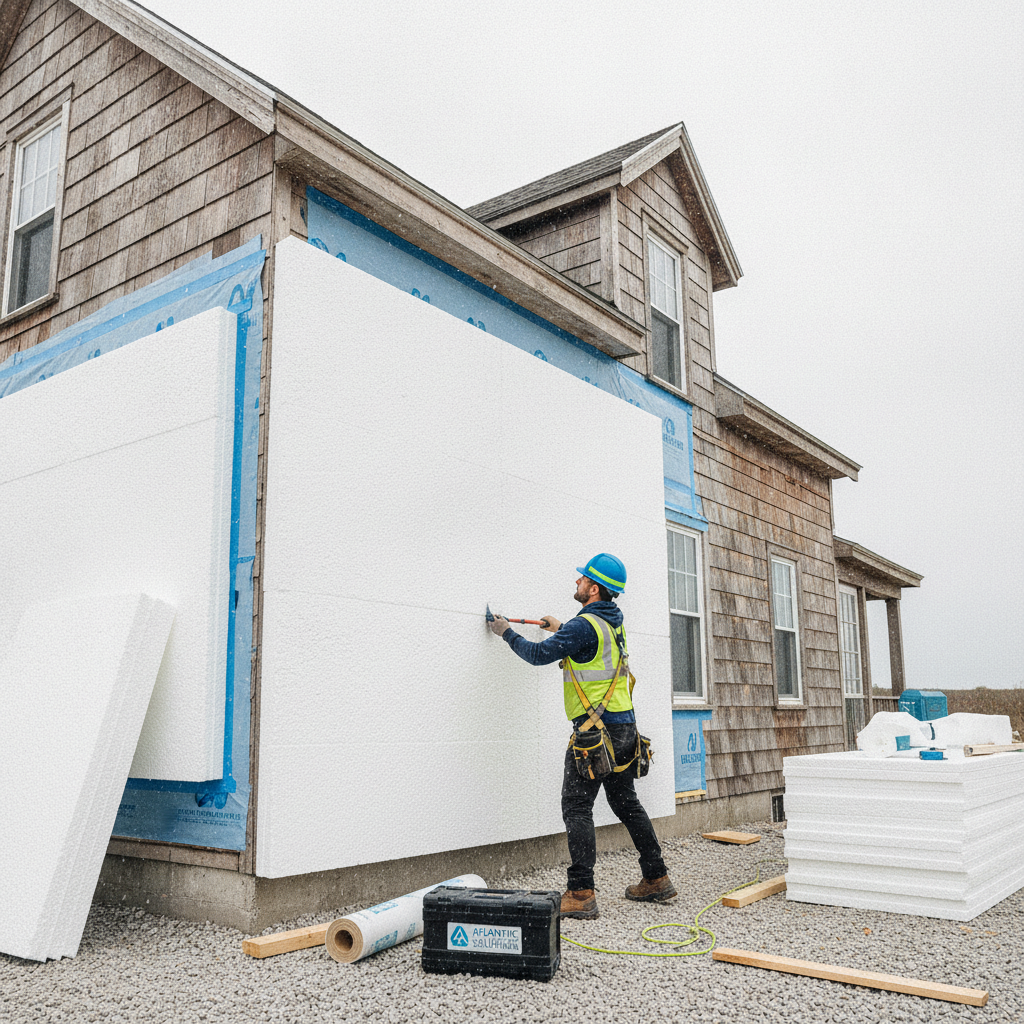
The sequencing of a DER is not arbitrary. The first step usually involves reducing heating and cooling loads through building envelope upgrades — upgrading roof insulation, adding internal and/or external wall insulation, installing efficient windows, and minimizing outdoor air infiltration by sealing the building envelope. Lowering heating and cooling demands then allows for the downsizing of HVAC equipment, which reduces equipment costs and decreases the overall electrical load.
This "envelope-first" logic is especially important in Atlantic Canada. Canada's cold climate means that space heating accounts for over 60% of the energy used in the average Canadian home. If you electrify the heating system before tightening the shell, you simply pay to push heat through a leaky box. Sustainable Buildings Canada notes that envelope upgrades reduce heating loads, which is important for achieving GHG reductions in jurisdictions where natural gas or fuel oil are the predominant energy sources for space heating — a description that fits much of our oil-heated housing stock across the Maritimes.
The envelope work itself centres on three things: insulation, air sealing, and glazing. Applying continuous rigid insulation across the exterior eliminates gaps that interrupt thermal protection, creates a uniform barrier that prevents heat transfer, and reduces energy losses caused by structural components like studs, which act as thermal bridges. For new-build and major-renovation projects, our VY 1200-Flex House Kit builds this thinking in from the start — its R32-rated OSBLOCK™ technology is engineered specifically for the Atlantic Canadian climate, eliminating much of the thermal-bridging headache that retrofit crews fight on older stud walls.
Air Sealing: The Highest-Value, Lowest-Glamour Step
Air leakage is the quiet budget-killer of any retrofit. Research compiled by Pacific Northwest National Laboratory found that 71% of existing homes have air leakage rates of 10 or more air changes per hour at 50 pascals of pressure (ACH50), indicating a significant amount of air leakage through the building envelope. By comparison, modern deep-retrofit panel systems target dramatically tighter numbers — one U.S. Department of Energy cold-climate solution aims for airtightness of 1.05 air changes per hour at a 50 Pa pressure differential.
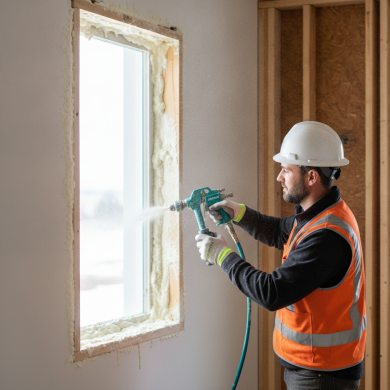
That's nearly a tenfold improvement, and it's where a lot of the 50% reduction actually comes from. Properly applied, rigid foam insulation serves as an effective air barrier, preventing drafts and moisture infiltration, which protects the building's structural integrity by reducing the risk of condensation-related damage. For crews chasing gaps around penetrations, rim joists, and window rough openings, we carry application tools like the VY-005 AL Foam Gun, built with a nickel-coated aluminum alloy body for the kind of repeated, precise sealing work a deep retrofit demands.
Windows, Doors, and Mechanical Systems
Once the opaque envelope is insulated and sealed, glazing and doors are the next weak points to address. Glazing replacement and weatherization are core DER measures, and in a heating-dominated climate the goal is to minimize conductive heat loss while maintaining useful solar gain. Triple-pane systems like our MB-70HI high-insulation aluminium window are designed for exactly this role, and on the entrance side, premium options such as the MB-86N SI Doors bring high-performance aluminium profiles to the threshold.
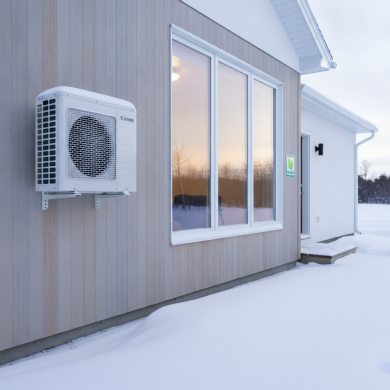
Only after the envelope is handled should mechanical systems be upgraded — and because loads are now lower, the equipment can be smaller. A deep retrofit, as Clean50 describes it, includes upgrades to insulation, air tightness, heating and cooling systems, and ventilation, aiming for at least a 50% reduction in energy use and maximum cost-effective carbon reductions. The payoff extends beyond the single home: research from Sustainability Solutions Group and RMI found that combining envelope upgrades with heat pump electrification can reduce winter peak demand by up to 25%. That's a meaningful signal for a region where housing construction remains active — Efficiency Nova Scotia continues to offer programs, rebates, and a network of preferred local contractors to support this kind of work.
Funding the Gap: What's Available in 2026
Here's the honest landscape: the headline federal program many homeowners remember is gone. The original federal grant program closed to new applications in 2024, but provincial programs, utility rebates, and federal loans continue to provide financial support for energy-efficient home upgrades. The Canada Greener Homes Loan has also wound down — funding for the Canada Greener Homes Loan is now fully committed, new loan applications cannot be approved, and this does not affect homeowners who already have an approved loan.
What remains active is more regional. The federal focus has shifted to the Canada Greener Homes Affordability Program for low- to median-income households, and provinces now carry most general rebates. Industry trackers note that Efficiency Nova Scotia offers solar rebates and deep retrofit grants, SaveEnergyNB integrates the federal Oil to Heat Pump program into its Enhanced Energy Savings Program, and efficiencyPEI offers point-of-sale instant rebates (program details change frequently, so always confirm current terms directly with the provincial agency). Note as well that July 31, 2026, is the last day to apply to the Oil to Heat Pump Affordability program for residents of Alberta, Manitoba, Northwest Territories, Quebec, and Saskatchewan — applicants in Atlantic provinces should refer to their provincial delivery agent.
Whatever path you take, almost every program hinges on the same anchor: Natural Resources Canada provides data gathered through the EnerGuide Rating System. A registered energy advisor's pre- and post-retrofit EnerGuide evaluation is how you prove you crossed the 50% line — without it, you have a renovation, not a documented DER.
Key Takeaways
- 50% is the bar. A deep energy retrofit must cut a home's total energy use by at least half versus its historical baseline — it is an outcome, not a budget size.
- Envelope before equipment. Insulation, air sealing, and high-performance windows/doors reduce loads first, letting you downsize (and electrify) mechanical systems more affordably.
- Air sealing punches above its weight. With most older homes leaking 10+ ACH50, tightening the shell is often the single biggest contributor to deep savings.
- The funding map changed in 2026. Federal grants and loans have closed; provincial agencies (Efficiency Nova Scotia, SaveEnergyNB, efficiencyPEI) now lead — and an EnerGuide evaluation remains essential.
- Most retrofits stop at ~20%. Reaching 50% takes a whole-home plan, not a piecemeal upgrade.
Planning a Deep Retrofit in PEI, NS, or NB?
A true deep energy retrofit is a coordinated build, not a shopping list — and the right materials make the 50% threshold achievable instead of aspirational. As Prince Edward Island's leader in sustainable, energy-efficient building products, VY Build supplies the high-performance envelope components, triple-pane windows, doors, and tools that Atlantic Canada's contractors rely on. Explore our product catalog to spec your next retrofit, or talk to our team about how the VY Flex House series fits into your project.