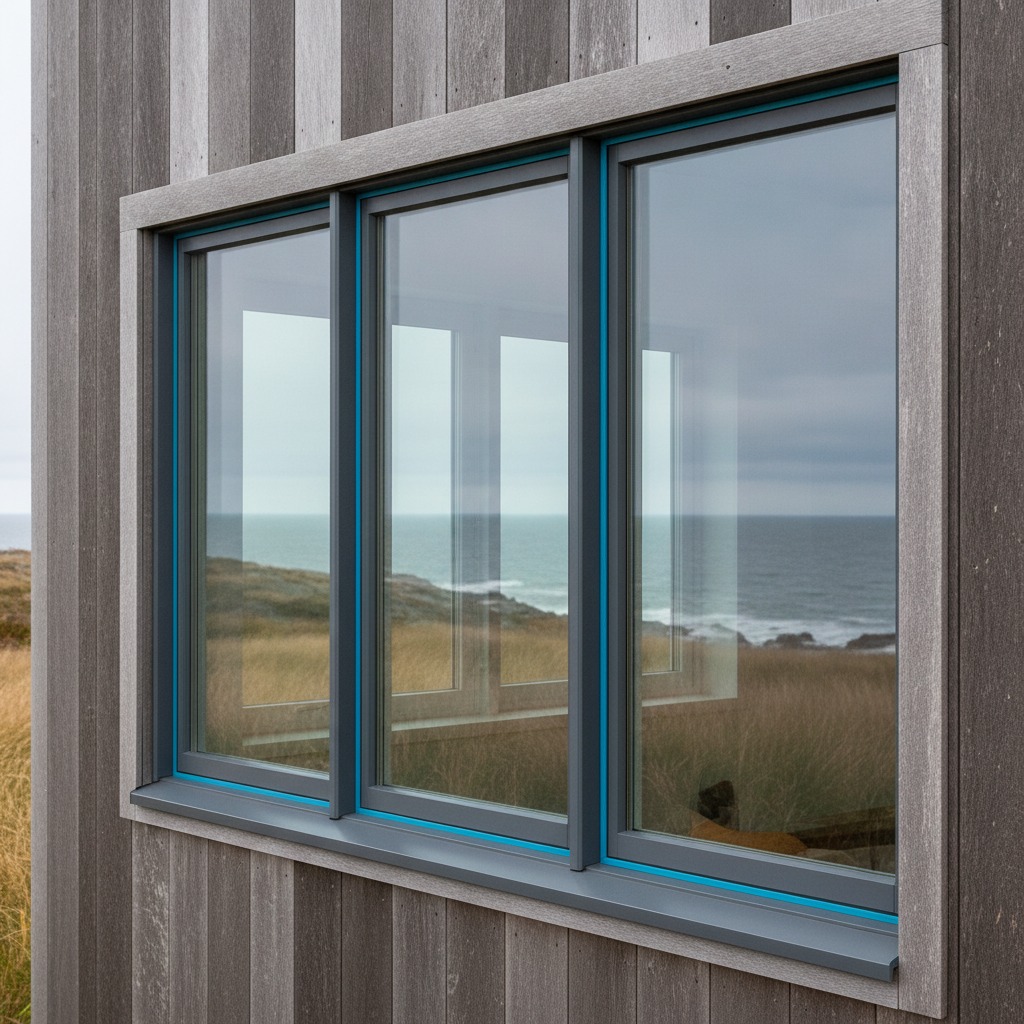
Coastal Wind Loads & Triple-Pane Windows: NS Spec
If you are specifying windows for an exposed site on the South Shore, in Cape Breton, or along an open stretch of PEI coast, the glass package is not your first problem. The wind is. A triple-pane unit that performs beautifully in a sheltered subdivision can be the wrong call on a headland, and the reason has nothing to do with U-value. This post walks through how NBCC wind pressure zones, frame rigidity, and locking hardware interact on coastal and exposed rural sites — and names the point where a simpler casement beats a tilt-and-turn.
Start with the number, not the window
Before you pick a frame system, you need the reference wind pressure for the site. The National Building Code of Canada (NBCC 2020) uses a 1-in-50-year reference wind pressure, written as q50, and it varies enormously across Atlantic Canada.
To put scale on it: St. John's, NL carries a q50 of 0.95 kPa under NBCC 2020 — nearly twice the 0.48 kPa of inland Toronto, according to National Building Code of Canada (NBCC 2020) figures published via loadcalculator.ca. That is the highest of any major Canadian city, driven by its coastal Atlantic location and open-ocean exposure.
Nova Scotia and PEI coastal sites do not all hit the St. John's number, but the lesson holds: the same window spec that is fine inland can be under-rated on an exposed Maritime lot. The q50 value, multiplied by the exposure factor and gust factors in the code, is what your window has to resist — in both directions.
Negative pressure is the quiet failure mode
Most people picture wind as something pushing in on the glass. On a coastal build, the load that governs is usually the opposite: negative pressure, or suction, pulling the sash outward on the windward and leeward faces. This is where cheap hardware and flexible frames fail.
Under suction, the sash tries to peel away from the frame at the lock side. A single-point latch concentrates all that resistance at one spot and lets the sash bow between the latch and the hinges. Air infiltration climbs, the gasket unseats, and in an extreme event the sash can disengage. This is why multi-point locking matters far more on an exposed site than it does inland — it clamps the sash to the frame at several points along the perimeter, spreading the suction load and keeping the gasket compressed.
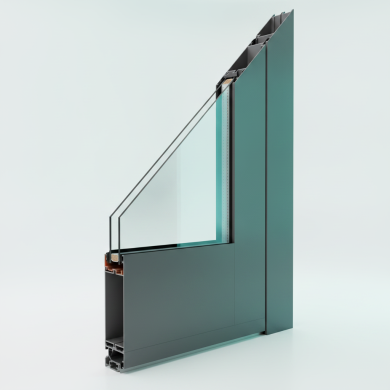
Frame rigidity is the other half. A deep, well-reinforced profile deflects less under the same pressure, which keeps the glazing seal intact and the hardware engaged. We publish the chamber counts and installation depths for the window lines we carry so you can match the profile to the load, rather than guessing.
Tilt-and-turn: what the geometry adds, and what it doesn't
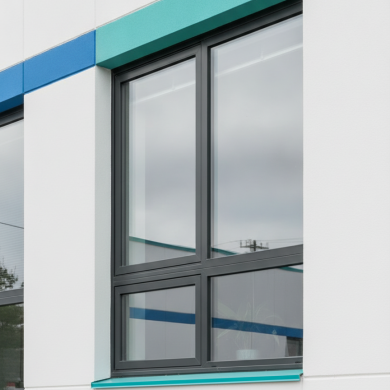
Tilt-and-turn windows are popular for good reasons — the inward tilt gives controlled ventilation, and the full inward swing makes cleaning and egress easy. The hardware is inherently multi-point, which is a genuine advantage under suction loads. Our European window lines, like the IGLO ENERGY — Alaska 1 with its stacked rectangular glazing and 82mm installation depth, run this hardware as standard.
But be honest about the trade-off. Tilt-and-turn sashes are heavy, especially with a triple-pane glass package, and the inward-opening operation means the sash and its seal sit on the warm side of the wall. On a very high-load elevation, the added sash mass and the leverage of a large opening unit can work against you if the opening is oversized. The geometry does not magically beat wind — it just gives you better hardware engagement to work with.
When a casement is the right call
Here is the part nobody selling windows likes to say: on the most exposed elevations, a fixed unit or a compact outward-opening casement is often the better structural choice. A casement closes against its frame, so suction presses the sash into the gasket rather than pulling it off. For a seaward-facing wall where wind governs, mixing fixed glazing and casements on the high-load face and reserving tilt-and-turn for sheltered elevations is a perfectly sound spec. Do not pay the triple-pane premium on a unit that is in the wrong configuration for its wall.
Speaking of that premium: triple-pane units carry a cost premium of roughly 20–30% over equivalent double-pane units installed in Canada, and for a full-house replacement of about 12 windows that typically adds $2,000–$5,000 to the project, according to TotalSeal Windows' Canadian trade pricing guide (2026). On a coastal build the right answer is not "triple-pane everywhere" — it is the correct glass and the correct opening type per elevation, driven by the q50 math.
Why this matters right now
Atlantic Canada is building. CMHC reports that nearly 180,000 purpose-built rental units are under construction nationally, with Atlantic Canada on track for double-digit percentage increases in rental inventory over the next two years. A lot of that stock is going up on sites that were skipped a decade ago — including exposed, wind-loaded lots. Getting the window spec right at the coast is no longer an edge case.
For first-time buyers financing their own build, the federal Home Buyers' Plan (HBP) lets you withdraw from an RRSP without immediate tax penalty, repaid over 15 years — worth flagging to a homeowner client weighing the triple-pane premium.
How we help on the spec
We are a supplier, not a builder — so our job is to put the actual numbers in front of you before you order. We buy each line from the factory that makes it well — in Europe where that is Europe, elsewhere where it is not. We publish the installation depths, chamber counts, Ud values and glazing options so you can match a window to the wind load on each elevation, and we carry both tilt-and-turn and casement-capable systems across our range. Where a line is covered, it comes with the manufacturer’s limited lifetime warranty, in writing before the purchase. If you are planning a full package build, the VY 1200 Windows, Doors & Flooring Kit coordinates the opening schedule into one delivery.