European Triple-Pane Window U-Value Testing Protocols
European Triple-Pane Window U-Value Testing Protocols: Verifying Real-World Performance
European window manufacturers have revolutionized energy efficiency testing with sophisticated protocols that push triple-pane glazing systems to their thermal limits. While North American builders often rely on single-point NFRC ratings, European testing standards like ISO 10077-2 provide a more comprehensive view of real-world window performance — but these differences can create confusion when specifying high-performance fenestration for Atlantic Canada projects.
Understanding European Testing Methodologies
European window testing relies on ISO 10077-2, which can determine U-values up to 18% different from NFRC-100 calculations for the exact same double-pane window assembly. This variance stems from fundamental differences in testing parameters, including indoor and outdoor design temperatures, surface film coefficients, and computational algorithms.
Our catalog includes the IGLO ENERGY — Alaska 2 series, which exemplifies European engineering precision with its 7-chamber frame structure and dual EPDM gasket system. The innovative sealing system guarantees great parameters in energy-efficiency and applies a central gasket made of foamed EPDM — a world-first solution in such a system.
IGLO ENERGY Chamber Profile Analysis
The thermal performance of multi-chamber profiles depends heavily on chamber geometry and reinforcement design. IGLO ENERGY systems feature 7-chamber frame and sash profiles made exclusively of prime material in A-class with installation depth 82 mm. This configuration creates multiple thermal breaks that dramatically reduce conductive heat transfer through the frame assembly.
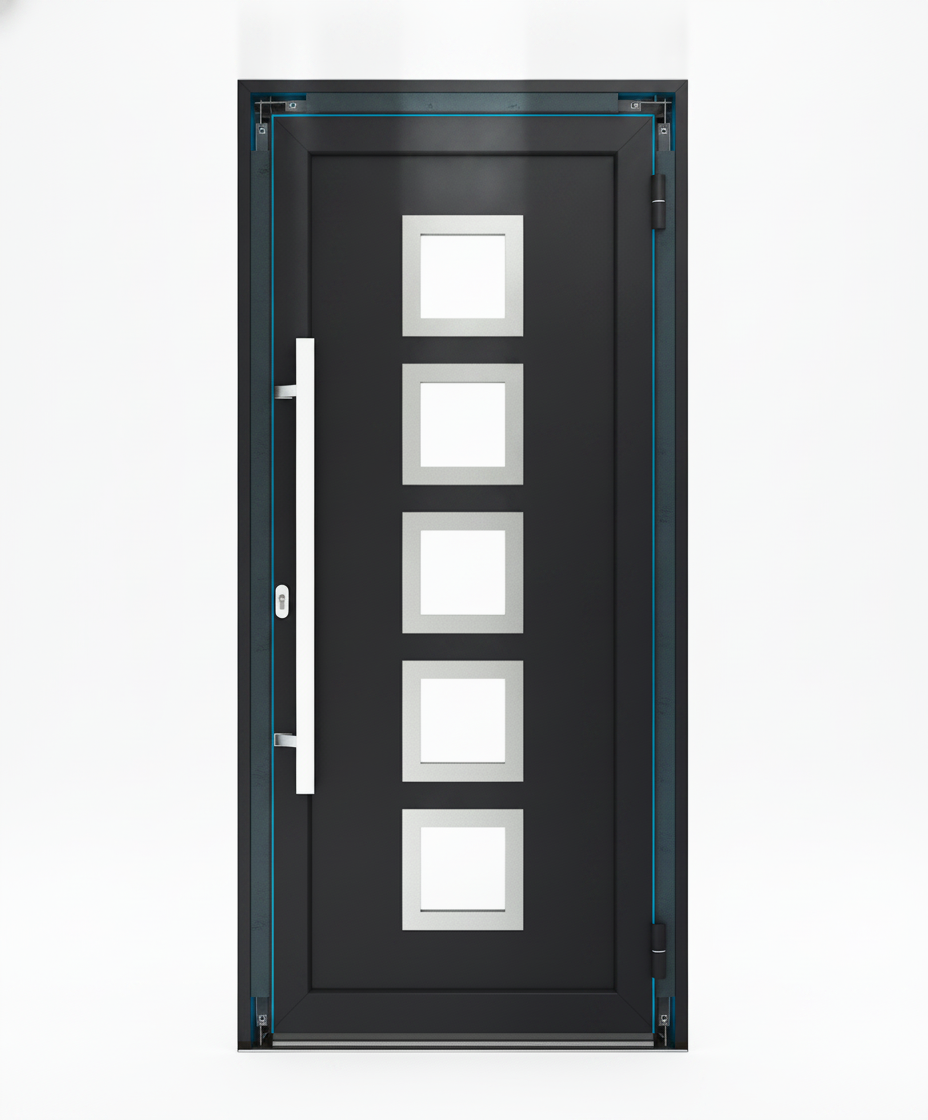
We've observed that remarkable thermal insulation parameters are ensured by the optimum 7-chamber profile structure, a specially designed sealing system made of foamed EPDM and glass packages with high thermal insulation parameters. The Alaska 2 variant features modified stacked glazing that achieves Ud = 0.8 W/(m²K) for the complete door assembly.
Glass Package Verification Methods
Standard glass packages feature 4/18/4/18/4 configuration with thermal transmittance Ug = 0.5 W/(m²K), with options for four-glass packages filled with krypton achieving Ug = 0.3 W/(m²K). European manufacturers test these configurations under controlled laboratory conditions that simulate extreme temperature differentials.
The spacer width optimization follows established thermal modeling protocols. Historically the spacer width has been determined by a graph showing the diminishing returns between convective heat losses and conductive heat losses within the air/argon space between glass panes, plotted based on outputs using surface film coefficients determined by testing protocols.
Real-World Installation Tolerance Testing
Laboratory U-values represent ideal conditions, but field installation introduces variables that European testing protocols attempt to quantify. Plans examiners may not accept calculations for energy code compliance using converted European U Values, requiring code default U values of .55 for triple pane windows in some North American jurisdictions.
European window manufacturers put more emphasis on U-values and have the lowest values of 0.80 on the market compared to the UK. However, these ratings require careful interpretation when adapting to Atlantic Canada's unique climate conditions and building code requirements.
Performance Verification in Atlantic Canada Climate
Building permits across Atlantic Canada reflect growing demand for high-performance fenestration. Statistics Canada reports building permits increased $821.3 million to $12.8 billion in December 2025, driven by residential sector gains, indicating strong market momentum for energy-efficient construction.
European triple-pane systems like the IGLO ENERGY series offer distinct advantages in Atlantic Canada's maritime climate. The 82mm installation depth provides superior thermal bridge mitigation compared to standard North American profiles, while the triple sealing system addresses the region's challenging wind and moisture conditions.
Testing Protocol Harmonization
There's no consistent relationship between NFRC and ISO testing systems' results for a given window assembly — sometimes NFRC predicts a lower U-value than ISO, and sometimes vice versa, due to differences between algorithms, indoor and outdoor design temperatures, design solar radiation intensity, and surface film coefficients.
This variability underscores the importance of working with suppliers who understand both testing methodologies and can provide appropriate documentation for local building officials. We ensure all European fenestration products include comprehensive technical specifications that address North American compliance requirements.
Key Takeaways
• European ISO 10077-2 testing can yield U-values up to 18% different from NFRC-100 protocols for identical window assemblies
• IGLO ENERGY 7-chamber profiles with foamed EPDM sealing represent cutting-edge thermal performance engineering
• Atlantic Canada projects require careful coordination between European test data and local building code compliance
• Krypton-filled glass packages can achieve Ug = 0.3 W/(m²K) under controlled laboratory conditions
• Installation tolerance and field conditions significantly impact real-world thermal performance
Ready to Upgrade Your Fenestration Performance?
Our European-engineered IGLO ENERGY systems deliver laboratory-verified thermal performance that translates to real-world energy savings. Whether you're planning a high-performance residence or commercial project, we provide complete technical documentation and local building code compliance support.
Contact our fenestration specialists today to discuss how European triple-pane testing protocols can inform your next Atlantic Canada project. We'll help you navigate the technical specifications and ensure optimal performance for your specific application.