You’re leaving the sauna before the good part.
Most people step out after a few minutes because their head feels too hot. The rest of them was only getting started. Here is why, and what sauna cultures have done about it for generations.
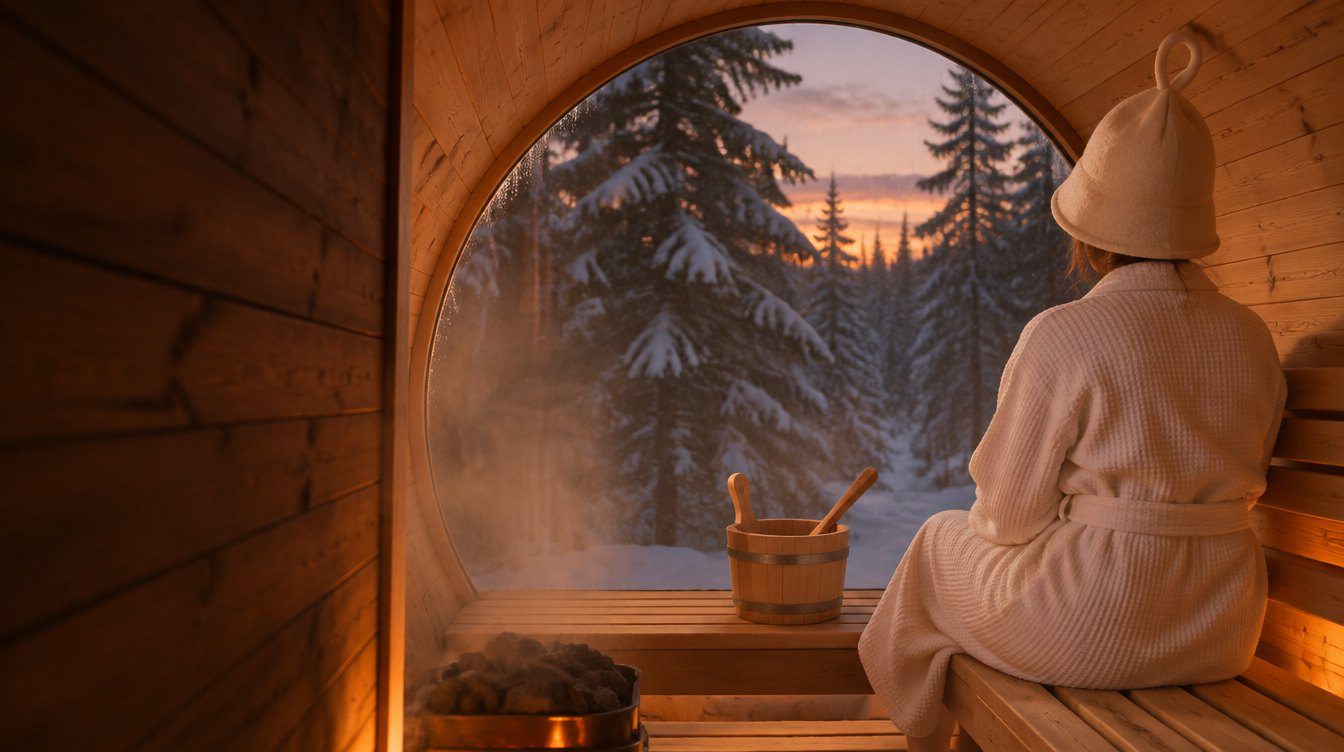
The part people love comes late.
A sauna is not instant. Your body moves through a round in stages, and the stage regulars talk about is the last one.
You warm up
Your skin heats first. It feels intense because the change is sudden, not because you are done.
You start to sweat
The warmth works inward and your muscles begin to let go. This is where many people already reach for the door.
You settle
Breathing slows and the heat stops feeling like a fight. It is the calm, loose feeling people build a sauna for.
Health guidance generally treats 15 to 20 minutes as a full round for a healthy adult, with 5 to 10 for beginners. Leave after four or five and you have paid for the warm-up and skipped the rest. The timeline is an illustration, not a stopwatch.
Your head sits in the hottest air in the room.
Hot air rises and stays up. In a sauna that creates layers, and the top layer is exactly where your head is.
In a sauna study reported by Harvia Labs, sensors placed at two heights read about 69 °C at head height and about 51 °C at sitting height. Your scalp, ears and hair have the least protection and get the most heat.
Measured values from Harvia Labs’ sauna research series. Ceiling and floor are shown for direction only. Every sauna differs.
So your head calls time. The rest of you would have happily stayed.
Sauna cultures solved this long ago. They put on a hat.
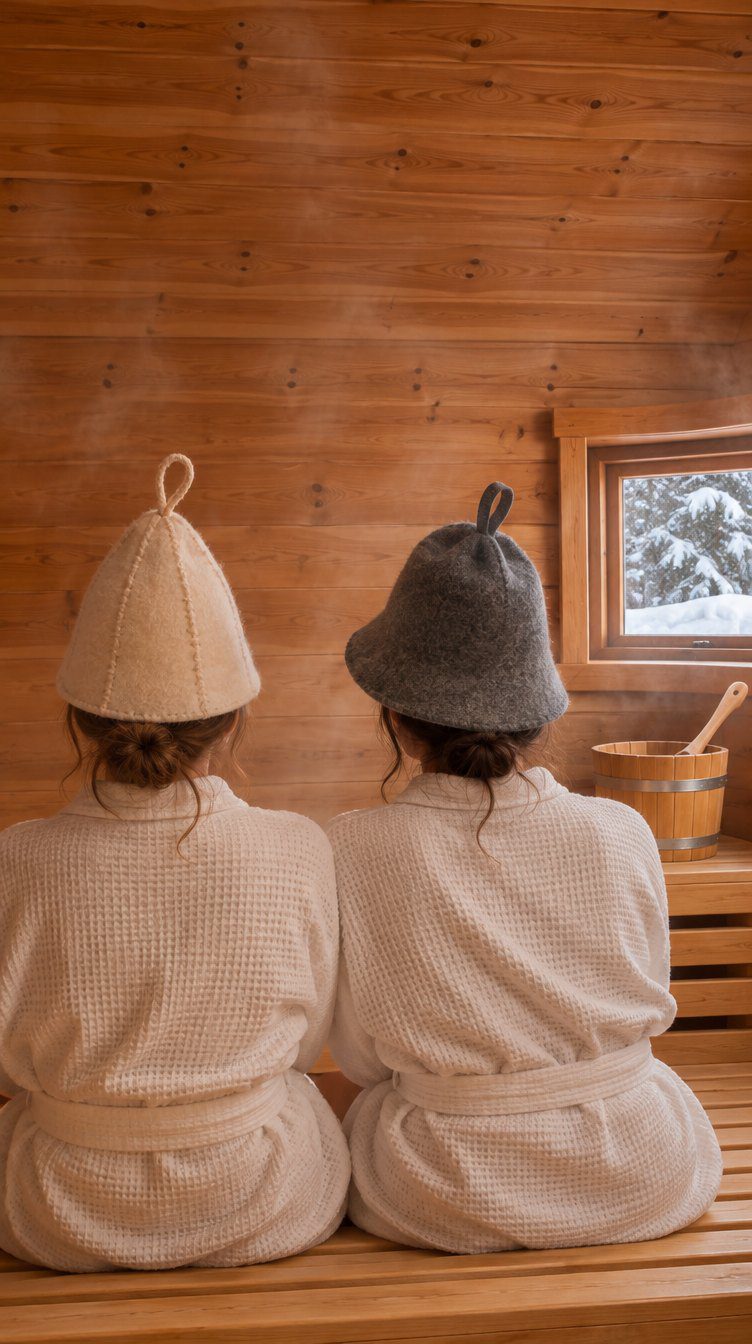
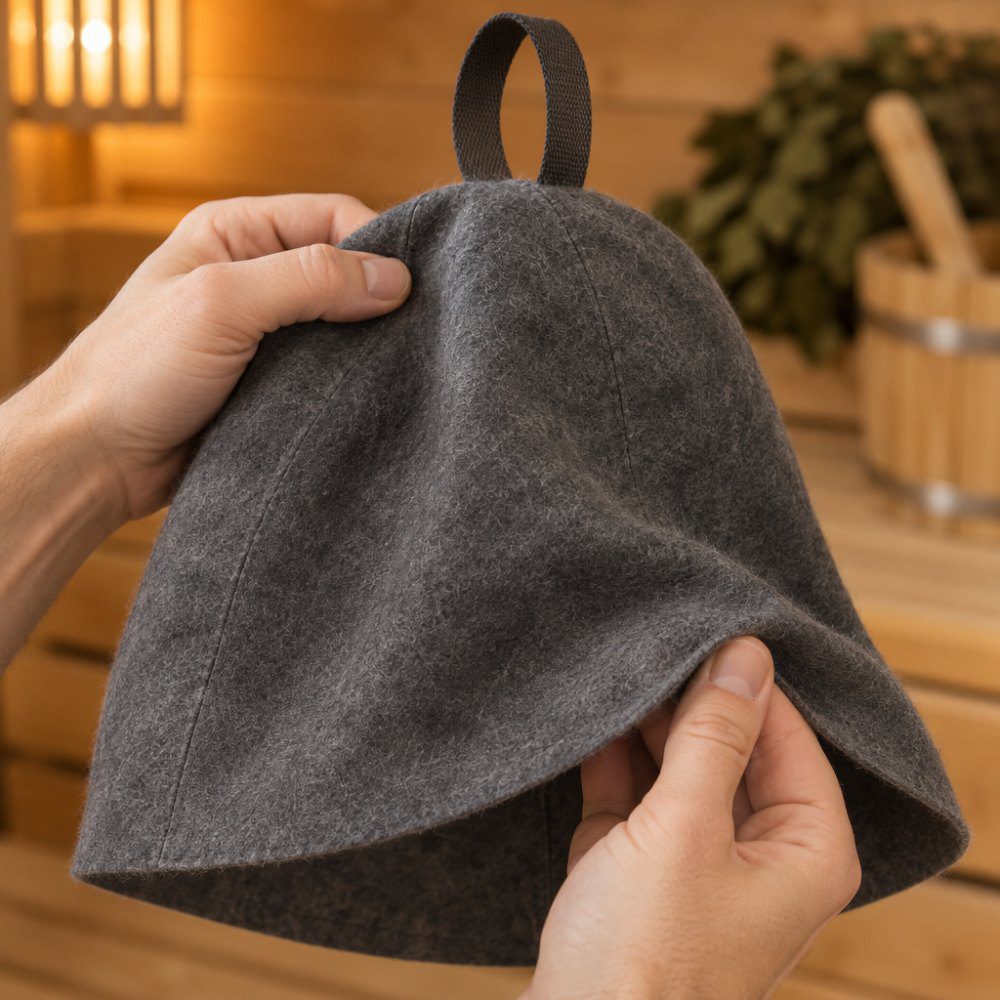
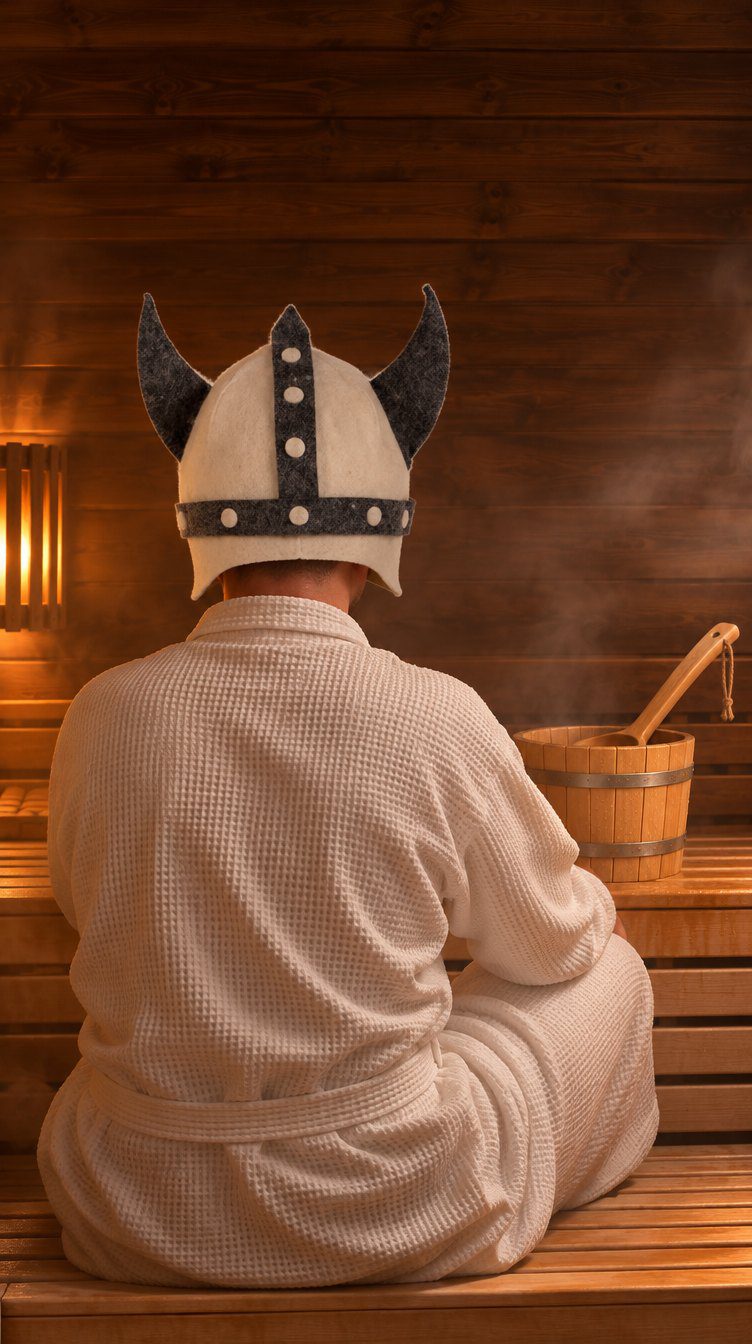
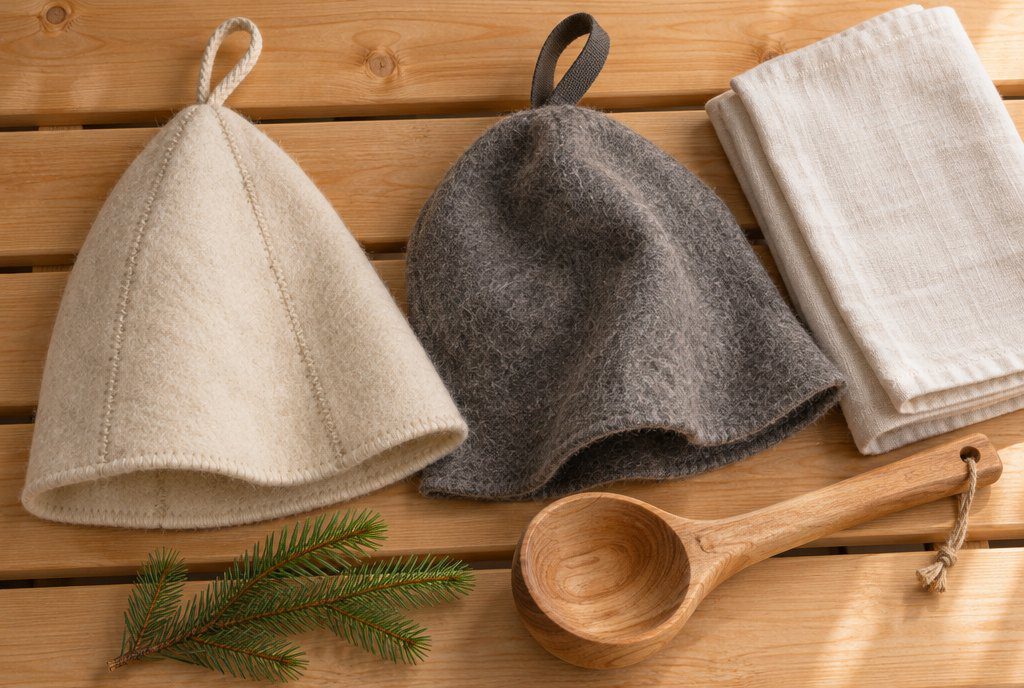
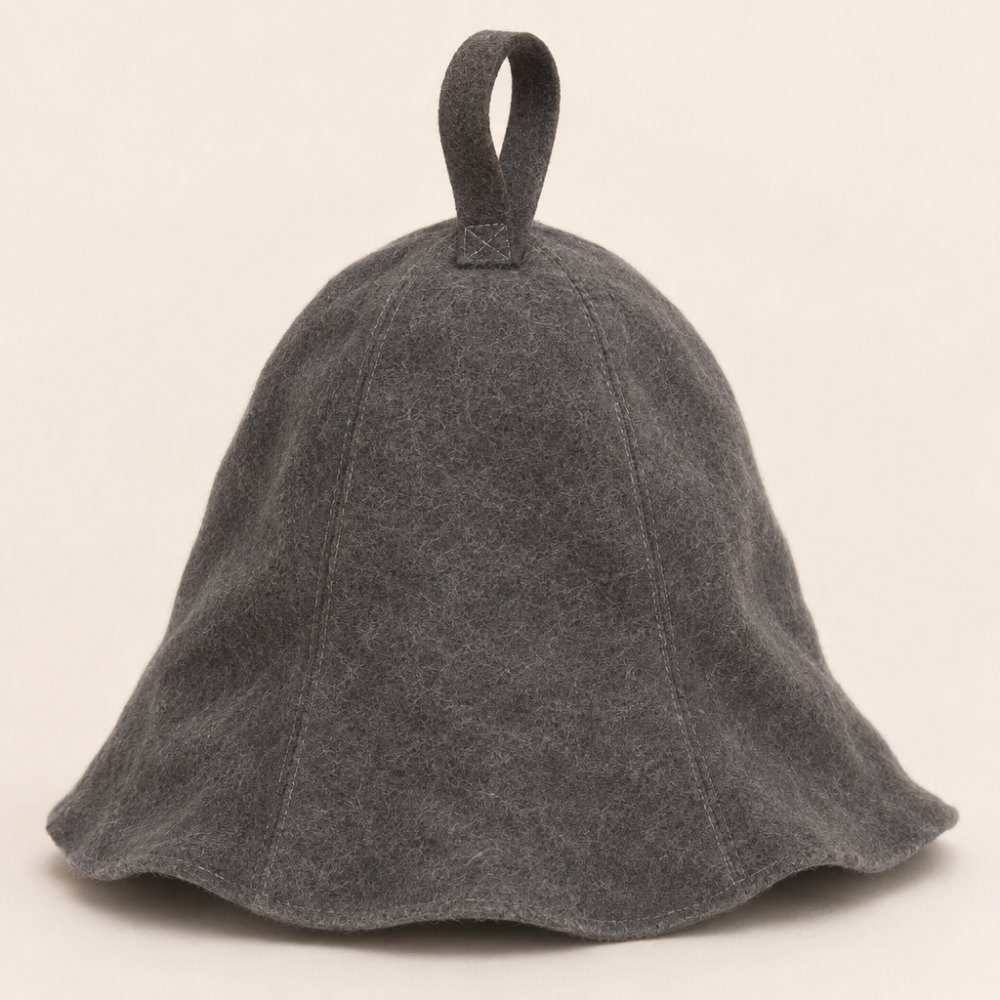
In Finland, the Baltics and the banya tradition, a thick felt hat is part of the kit, next to the towel and the bucket. It shields the head, so the rest of the body can take the heat.
Saunas are spreading fast across Canada. The hat has not made the trip yet, which is why most people here have never heard of one.
A full round still has a ceiling.
The point is to finish your round in comfort. It is not to stay in for longer than is sensible.
- Harvard Health and Cleveland Clinic both advise staying no more than about 15 to 20 minutes at a time.
- Leave straight away if you feel dizzy, weak, sick or short of breath.
- Drink water before and after, and skip alcohol.
- A hat makes your head more comfortable. It does not change how much heat your body takes on, so the same limits apply.
- If you are pregnant or have a heart condition, ask your doctor first.
Get the sauna starter guide.
How to run a proper round, what to bring, and what to look for in a home sauna. You can read it straight away.